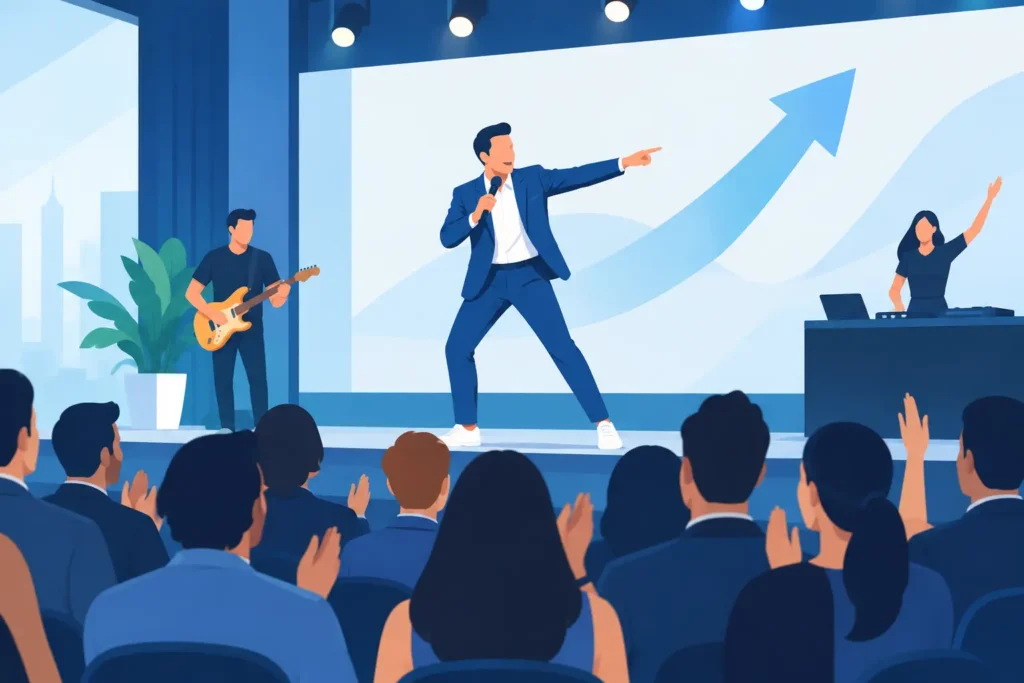
A sales kickoff can look perfect on the agenda and still fall flat in the room. The strategy is sound. The leaders are prepared. The goals are clear. But if the energy fades after lunch, the recognition dinner feels obligatory, or the team spends breaks checking email, the message loses momentum. Sales kickoff entertainment is not a decorative add-on. Used well, it is a practical way to get people present, engaged, and ready to carry the company’s goals into the year ahead.
For event planners and sales leaders, the real question is not, “What would be fun?” It is, “What will make this meeting more effective?” The right entertainment gives your people a shared experience, creates a release valve during an intense agenda, and makes key moments easier to remember long after the ballroom lights come up.
What Sales Kickoff Entertainment Needs to Do
A kickoff is different from a holiday party. Your audience is there to align around revenue targets, new products, market changes, and performance expectations. They may be excited, skeptical, tired from travel, or carrying the pressure of a difficult previous quarter. Often, they are all of those things at once.
That means the entertainment has a job to do. It should reset attention without pulling the room away from the business purpose. It should feel premium enough for top performers and senior leadership, but accessible enough that every rep, manager, and support team member feels included.
The strongest choices usually accomplish three things: they raise the room’s energy, make attendees active participants rather than passive spectators, and give leaders a memorable moment to connect back to the company message. If a performance cannot support at least one of those outcomes, it may be enjoyable, but it is probably not the best use of kickoff budget.
Start With the Moment You Need to Improve
Entertainment works best when it is selected for a specific point in the agenda. A great performer at the wrong moment can still create friction. Before comparing acts, identify where the audience needs the most help.
Opening the Meeting With Immediate Energy
The opening sets the emotional baseline for the entire event. If the first hour begins with long introductions, housekeeping, and slides, attendees can settle into observer mode before the core message ever lands.
A high-impact interactive opener gives the room a reason to look up. It can create laughter, surprise, and a visible sense of collective attention before the executive team takes the stage. This approach is especially effective for annual meetings where attendees have not been together in person for months.
The trade-off is timing. An opening act should be tight, polished, and coordinated with leadership. You do not want a performer who needs extra setup time, runs long, or forces the CEO to follow a moment that cannot be matched. The goal is to amplify the opening, not hijack it.
Keeping Attention Through a Content-Heavy Agenda
Most sales kickoffs contain necessary but demanding material: compensation updates, product launches, territory planning, customer insights, and training. Even a strong agenda can create mental fatigue.
Short entertainment resets between major sessions can bring the room back without requiring a full production break. Think of these moments as energy management. A skilled emcee or interactive performer can re-engage the audience, reinforce a theme, and move people into the next segment with more attention than they had five minutes earlier.
This is where customized material matters. If an entertainer can reference your product rollout, company language, or kickoff theme naturally, the experience feels like part of the meeting rather than an interruption between business sessions.
Making the Awards Dinner Feel Earned
Recognition dinners often carry high expectations. Top producers deserve to feel celebrated, while newer team members need to see what success looks like at the company. Yet many awards programs become predictable: dinner, applause, another name, another photo, another speech.
A headline performance can turn that evening into the moment people talk about on the flight home. The right show adds momentum around awards, gives leadership a clean transition between recognition segments, and creates a high-value experience without asking attendees to manufacture enthusiasm.
For a seated dinner, choose entertainment designed for a banquet environment. The performer needs to understand sightlines, table service, microphones, pacing, and the reality that some guests will be networking while others are still eating. A theater-style show may be excellent in a theater and ineffective in a ballroom unless it has been built for corporate events.
Creating Connection at Receptions and Networking Events
Cocktail receptions are full of opportunity and risk. People naturally gravitate toward colleagues they already know, leaving newer hires, remote employees, and guests standing at the edges of the room. Background music fills silence, but it rarely creates a reason for strangers to interact.
Strolling close-up magic changes the dynamic. It gives small groups a shared experience, breaks the first-conversation barrier, and builds energy without stopping the flow of the reception. For a sales kickoff, it can be especially effective before dinner, during a sponsor reception, or at an executive hospitality event.
The key is choosing a performer who understands professional boundaries. The material should be smart, fast-moving, and inclusive. Nobody wants a sales leader singled out in a way that feels embarrassing, and nobody needs entertainment that turns the reception into a noisy sideshow.
Make the Entertainment Support the Sales Message
The best sales kickoff entertainment does not need to become a 45-minute commercial. In fact, forcing too much branding into a performance can make it feel scripted and reduce the impact. But there is a major difference between a generic act and an act that has been thoughtfully aligned with your event.
A customized performer can build your central theme into the language of the show, refer to a new initiative at the right moment, or create an effect around a meaningful business idea such as collaboration, customer trust, speed, or possibility. The message lands because the audience experiences it rather than simply seeing it printed on another slide.
Give the entertainer a clear briefing. Share the audience profile, goals for the meeting, internal language to use or avoid, leadership sensitivities, and the level of audience participation that will feel right. A seasoned corporate entertainer will ask for this information because it helps protect your event, not because they are looking for extra material.
Mike Seege approaches corporate magic as an engagement tool: a way to hold attention, build a crowd, and make an event message more memorable. That is the standard worth looking for, whether you are booking a reception performer, a headline show, or an emcee who can keep a multi-day agenda moving.
Choose a Format That Fits Your Room
There is no universal best choice because the venue, group size, schedule, and audience culture all matter. A 75-person leadership group needs something different from a 1,200-person national sales meeting.
For smaller groups, close-up interactive entertainment can create a highly personal experience. For large general sessions, a stage presentation with strong visual moments and audience involvement delivers better reach. For a multi-day program, an emcee who can introduce speakers, handle transitions, recover from schedule changes, and maintain audience energy may provide more value than a single stand-alone performance.
Do not underestimate logistics. Ask how the act works with your room layout, sound system, lighting, stage size, meal service, and run of show. Confirm the performer’s arrival time, technical needs, rehearsal expectations, and backup plan for travel complications. A reliable entertainment partner makes your job easier behind the scenes, not harder.
Avoid the Most Common Booking Mistakes
The biggest mistake is booking entertainment based solely on a highlight reel. Promotional clips can show talent, but they do not reveal whether the performer can work a corporate audience, follow event direction, adapt to a delayed dinner service, or maintain a polished tone around executives and clients.
Another mistake is treating entertainment as a last-minute filler. When it is added after the agenda is locked, it often gets squeezed into an awkward time slot with no clear purpose. Bring the performer into the planning conversation early enough to shape transitions and make the experience feel intentional.
Finally, resist the urge to choose the safest possible option. Safe can mean forgettable. Your sales team is being asked to take smart risks, create better customer conversations, and compete for attention all year. Their kickoff should reflect that level of ambition.
Measure Whether It Worked
Not every event outcome needs a spreadsheet, but your entertainment should produce visible signals of success. Watch how quickly attendees return from breaks. Listen for post-event comments that mention a specific moment. Review session feedback for energy, engagement, and overall experience. If the event includes sponsors, exhibitors, or guests, ask whether the reception created more conversations than usual.
For the next kickoff, use those observations to make a sharper decision. Did the room need more energy early in the day? Did the awards dinner need a stronger centerpiece? Did networking need more structure? Entertainment becomes more valuable when it is planned as part of the event strategy rather than evaluated as a one-night expense.
Your salespeople are about to spend a year earning attention in crowded markets. Give them a kickoff worth remembering – one that makes the goals feel bigger, the team feel closer, and the first day back in the field feel like a real beginning.