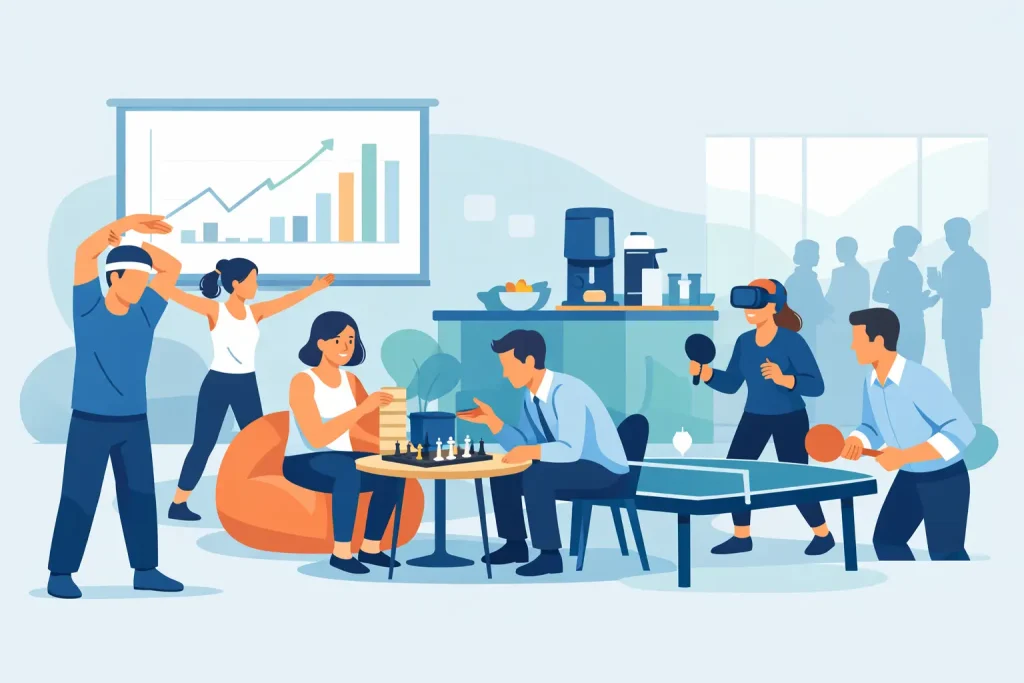
A conference break is where your audience decides whether to check email, disappear into the hallway, or stay engaged with the event you worked so hard to produce. The best conference break activations give people a reason to look up, laugh, participate, and return to the next session with more energy than they had before.
That matters because breaks are not empty space on an agenda. They are high-value moments for networking, sponsor visibility, brand recall, and audience recovery. Get them wrong, and the room leaks people. Get them right, and the break becomes one of the most talked-about parts of the day.
What the Best Conference Break Activations Actually Do
A strong activation is not simply something fun placed near coffee. It needs to fit the physical space, the break length, the audience profile, and the business goal. A 12-minute break between dense leadership sessions needs a different solution than a 45-minute sponsor reception.
The most effective options create a quick emotional shift. They break up passive listening, give attendees a low-pressure way to interact, and avoid creating a bottleneck that frustrates the people trying to grab lunch or make a call. For sponsors, the right activation can also start qualified conversations instead of collecting a bowl full of business cards from people who will never respond.
Here are 10 conference break activations that earn their place on the schedule.
1. Interactive Strolling Magic
Strolling magic is built for the reality of a busy conference floor. A skilled corporate magician moves through networking clusters, coffee lines, lounge spaces, and sponsor areas, delivering short, visual moments that pull people together without stopping the flow of the event.
This is especially effective when attendees do not know one another well. A shared moment of astonishment gives strangers an immediate reason to talk. It also works beautifully for sponsor-hosted breaks because branded messages, products, or themes can be woven into the experience without turning the interaction into a sales pitch.
The trade-off is that strolling entertainment is designed for small groups, not one giant audience. If your goal is a single, shared reset for 500 people at once, use it alongside a stage-based moment rather than as the entire plan.
2. A Fast, High-Energy Stage Reset
After a technical presentation or a heavy block of content, attendees often need more than coffee. They need a reset. A 10- to 15-minute interactive stage segment can wake up the room, create a collective laugh, and reestablish attention before the next speaker takes the stage.
Corporate magic, mentalism, audience participation, or a smartly facilitated game can all work here. The key is pace. This is not a second keynote. It should feel like a reward for staying in the room, while still supporting the professional tone of the conference.
For large general sessions, this may be one of the highest-impact uses of your break time. Everyone experiences it together, which gives the next presenter a more alert audience and gives attendees a shared reference point for the rest of the event.
3. Branded Challenge Stations
Challenge stations turn sponsor engagement into something people choose rather than something they avoid. Think quick problem-solving challenges, product-themed puzzles, reaction games, or collaborative tasks that take two to four minutes to complete.
The best version has a clear connection to the sponsor’s message. A cybersecurity company might use a quick code-breaking challenge. A logistics brand might create a timed coordination game. The objective is not to force attendees through a product demo. It is to make the brand’s idea tangible, then give the sales team a natural conversation starter.
Keep the instructions simple and the line moving. If attendees need a five-minute explanation before they can participate, the activation is asking too much during a short break.
4. A Hosted Networking Prompt
Networking is often listed as a conference benefit, but unstructured networking can be awkward, especially for first-time attendees and introverts. A hosted prompt changes that. It gives people a specific reason to introduce themselves and an easy opening question.
You might display a conversation prompt tied to the event theme, invite attendees to find someone from a different industry, or facilitate a rapid exchange around one challenge they are facing. A confident emcee can keep the energy up, make the instructions clear, and prevent the moment from feeling forced.
This activation is low-cost and useful for leadership summits, association meetings, and internal sales conferences. It works best when the room has enough space for people to move. It works less well in a narrow hallway where attendees are competing for coffee and restrooms.
5. A Live Illustrated Recap Wall
A visual facilitator or illustrator can transform key ideas from the morning into a large, evolving graphic display. During the break, attendees naturally gather around it, point out memorable quotes, take photos, and compare what stood out to them.
This is an excellent choice when your conference content is strategic, educational, or complex. It helps attendees process what they heard while creating a highly shareable visual asset for the event. It can also keep brand messaging visible without adding another screen or another slide deck.
The experience is more reflective than high-energy, so it is best paired with music, coffee service, or a second activation if your audience needs a bigger jolt.
6. Headshot or Profile Photo Pop-Ups
A polished professional headshot is a practical conference perk that attendees genuinely value. Set up a simple station with a photographer, flattering lighting, and a fast digital delivery process. The line will often form on its own.
For a sponsor, this can be a strong value exchange. Attendees receive something useful, and the sponsor receives positive association with a career-focused experience. For internal events, it can support employer branding and make the gathering feel thoughtfully produced.
Plan for capacity. If you have 300 attendees and only one photographer during a 20-minute break, most people will not get a turn. Either run the station across multiple breaks or make it available before and after the main program.
7. Micro Team-Building Challenges
Not every team-building activity needs an hour, a ballroom, and a stack of supplies. Short challenges centered on communication, observation, or problem solving can get people collaborating in a matter of minutes.
The strongest micro-challenges are easy to join midway through and do not embarrass participants. Think small-group puzzles, collaborative prediction games, or a fast interactive demonstration that reveals how assumptions shape decisions. When designed well, these moments entertain while reinforcing the conference theme.
For HR and culture leaders, this is a smart way to create connection without announcing, “Now it is team-building time.” People are far more receptive when the experience feels optional, fast, and genuinely enjoyable.
8. Silent Disco Breaks
A silent disco can turn an ordinary break into a visible energy surge. Attendees put on wireless headphones, choose a channel, and join a short guided dance, music, or movement experience. From across the room, it looks surprising enough to draw attention. Inside the headphones, it feels immersive and playful.
This works particularly well for younger audiences, sales kickoffs, incentive events, and conferences with an upbeat brand personality. It is not the right fit for every executive audience or every venue. Consider the culture before you commit. A room full of cautious senior leaders may prefer a lighter interactive reset over a full dance-floor moment.
9. Local Flavor Experiences
When people travel for a conference, they want to feel a sense of place. A local tasting, artist demonstration, or regional experience can give the break more personality than another tray of cookies ever could.
In Las Vegas, Orlando, Nashville, Chicago, or New York City, a local-flavor activation can also make the destination part of the story. The best choices are compact, easy to access, and designed for quick participation. The goal is a memorable taste of the city, not a complicated detour from the conference agenda.
Be thoughtful about dietary needs, noise, and venue rules. Food-based activations create warmth, but they also create cleanup and service logistics that should be planned early.
10. A Surprise Pop-Up Performance
Sometimes the simplest way to reclaim a drifting crowd is a surprise. A brief pop-up performance in the lobby, sponsor area, or outside the ballroom can create instant curiosity and bring attendees toward the action.
The performance needs to be fast, polished, and appropriate for the setting. Corporate magic is particularly effective because it can happen close to the audience, requires minimal setup, and creates an immediate reaction. Mike Seege designs these moments around business events, where the goal is not applause alone but stronger energy, conversation, and recall.
Use surprise strategically. One great pop-up can feel special. Repeating the same interruption every break can dilute its impact.
How to Choose the Right Conference Break Activation
Start with the behavior you want to change. If people are leaving the meeting room too slowly, choose a fast stage reset. If sponsors need more meaningful conversations, use branded challenges or strolling entertainment near their booths. If your audience is tired after lunch, prioritize movement, music, or interactive participation.
Then look at the logistics honestly. How long is the break? Where will the activation live? What sound restrictions apply? Can attendees participate without surrendering their entire break? The most creative idea in the world fails if it creates a traffic jam outside the ballroom.
Finally, measure more than smiles. Track participation, dwell time in sponsor areas, leads generated, photos shared, and feedback on session energy. Those details help you prove the activation was not an extra expense. It was a strategic part of the attendee experience.
The right break activation tells attendees, without saying a word, that this conference respects their time and knows how to keep their attention. Make the next break the moment they talk about on the flight home.