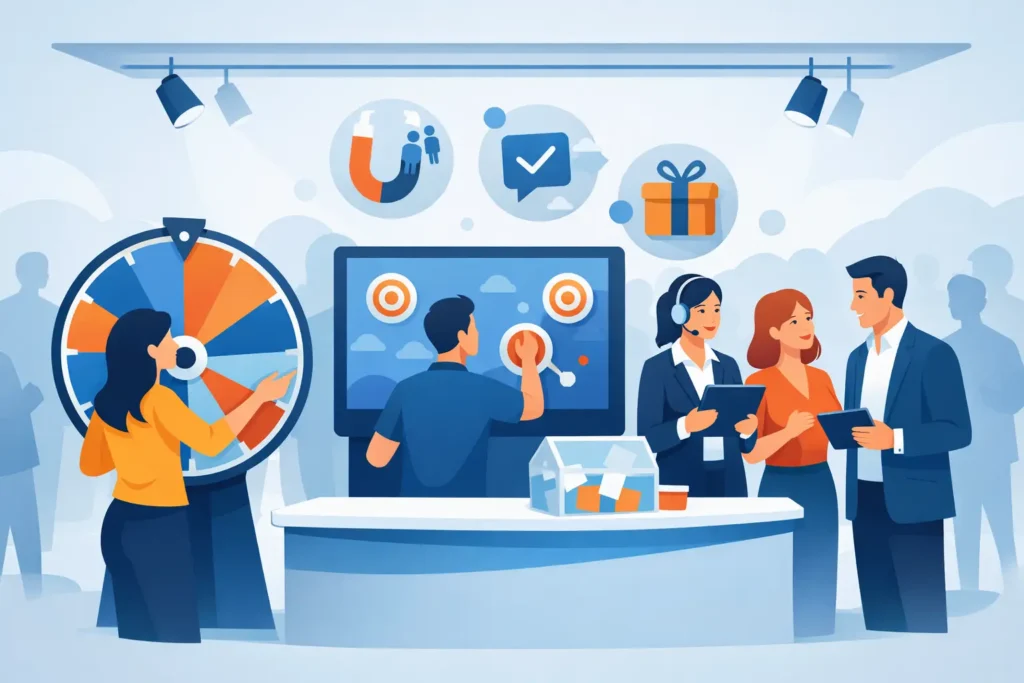
A busy trade show aisle is not the same thing as a productive booth. Plenty of exhibitors attract glances, hand out giveaways, and scan badges. Far fewer create the kind of interaction that makes a prospect stop, engage, remember the brand, and agree to a meaningful follow-up. That is where lead capture entertainment earns its place in a trade show strategy.
The right performer does more than create a crowd. They give your sales team a reason to start a conversation with people who would have otherwise kept walking. When the performance is built around your message, your booth becomes an experience with a business purpose: attract attention, qualify interest, capture contact information, and move the right people toward the next step.
Why Lead Capture Entertainment Works at Trade Shows
Trade show attendees are overloaded. They have aisles to cover, appointments to make, competitors to compare, and a bag full of brochures they may never read. A standard booth display has seconds to earn attention. An interactive performance changes that equation because it creates a visible moment people do not want to miss.
Crowds attract crowds, but the real advantage is what happens after someone stops. A skilled trade show magician can turn passive spectators into participants. That moment of participation gives your team a natural opening: ask a smart qualifying question, demonstrate the product, invite the attendee into a giveaway, or schedule a conversation with a specialist.
This is not about hiring entertainment to fill dead time. It is about using attention strategically. The best booth presentations create a pattern: draw people in, deliver a branded message, identify interest, and hand the conversation to your team while the energy is high.
The Difference Between a Crowd and a Lead
A packed booth can look impressive from across the aisle. It can also become a problem if nobody knows who the audience is, what they need, or how to contact them afterward. Entertainment without a capture plan is simply entertainment.
A lead-focused approach begins before the show floor opens. Decide what qualifies someone as worth pursuing. For one exhibitor, that may mean a decision-maker at a company above a certain size. For another, it may be a buyer facing a specific operational challenge. The goal is not to scan every badge in sight. The goal is to create more conversations with people your sales team can actually help.
Your performer should understand that distinction. The performance needs to be compelling enough to stop traffic, short enough to repeat throughout the day, and structured to leave room for a sales handoff. If every attendee walks away smiling but no one knows their name or business need, the booth missed the commercial opportunity.
Build the handoff into the experience
The cleanest lead capture happens when the transition feels natural. Rather than asking a person to complete a form out of nowhere, tie the action to what just happened. A customized effect can reveal a product benefit, a key campaign message, or a question that identifies the attendee’s priorities.
Once the presentation lands, a team member can step in with a relevant line: “Which of these challenges is your team dealing with right now?” That is a much better opening than “Can I scan your badge?” It respects the attendee, gives the representative context, and makes the follow-up feel earned.
What a Strong Booth Activation Looks Like
The most effective lead capture entertainment is not a standalone stage show dropped into a booth. It is a coordinated activation with clear roles, repeatable timing, and a message your team can use.
Start with the audience. Who needs to stop at your booth? If you sell to operations leaders, your presentation should speak to speed, waste reduction, efficiency, or whatever problem brings those leaders to the show. If you are targeting HR executives, the message may center on culture, retention, or employee experience. The magic gets attention, but the business relevance is what keeps the interaction from feeling random.
Next, determine the ideal performance rhythm. Short, high-impact sets often work best on a crowded floor because attendees arrive continuously. A performer can gather a group, deliver a memorable routine, highlight the brand message, and release people into conversations before the crowd blocks the booth entrance or the message gets diluted.
Then assign your sales team jobs. One person should be ready to greet people at the edge of the audience. Another should be positioned for the post-performance handoff. A third may handle badge scans, appointment scheduling, or a prize entry. When everyone waits until the trick ends to decide what to do, the moment disappears.
Make the Brand Part of the Moment
Trade show magic works best when it is customized with restraint. Your audience does not need a product brochure disguised as a card trick. They need an entertaining moment that makes one clear idea stick.
That might be a product name revealed in an unexpected way, a visual demonstration of a before-and-after result, or an effect built around the problem your company solves. The message should be simple enough to repeat and specific enough to matter. If attendees cannot explain why your company was part of the experience, the customization was too subtle. If the presentation feels like a commercial, it was too heavy-handed.
A professional corporate magician brings more than tricks. They understand pacing, crowd control, and how to keep the presentation polished in a noisy environment. They also know how to work with booth staff without making them look awkward or unprepared. That matters when your brand is on display in front of prospects, competitors, and senior leadership.
Capture Information Without Killing the Energy
There is a balance to strike. Ask too little, and your database fills with names that never convert. Ask too much, and attendees abandon the interaction before your team learns anything useful.
Keep the first exchange focused on a few details that help your sales team act. Badge data may provide the basics, but a quick conversation can reveal role, timeline, need, and authority. Those details are more valuable than a large pile of unqualified scans.
A giveaway can support this process, but it should not become the whole strategy. Random prize seekers inflate numbers without improving pipeline. Consider offering an experience, consultation, product demonstration, or premium item that appeals to the people you actually want to meet. The reward should reinforce the audience you are targeting.
It also helps to set a clear standard for what happens after each interaction. Label leads by priority. Record a short note while the conversation is fresh. Schedule meetings before attendees leave the booth whenever possible. A great performance creates momentum, but your process determines whether that momentum becomes revenue.
Measure More Than Booth Traffic
If you are investing in an activation, measure the results against your actual event goals. Total foot traffic matters, but it is only the beginning. Track the number of meaningful conversations, qualified leads, booked demonstrations, scheduled follow-ups, and opportunities that enter the pipeline after the event.
Compare those results with the show sections when the performer was active. Many exhibitors see a sharp difference between a quiet booth and one with a visible, interactive draw. That comparison helps you understand not just whether the entertainment was popular, but whether it improved the sales team’s ability to connect.
There are trade-offs. A high-energy presentation may attract broad crowds, while a more targeted message may produce fewer but better prospects. Neither is automatically right. It depends on whether your priority is brand awareness, pipeline creation, meeting volume, or a combination of all three.
Give Your Sales Team a Reason to Be Ready
The strongest trade show booths do not rely on luck, a bowl of candy, or a backdrop that looks like every other backdrop. They create a moment people want to join, then give the sales team a practical way to turn that moment into a conversation.
When lead capture entertainment is planned around your audience, message, and follow-up process, it becomes more than a crowd builder. It gives your booth a pulse, gives attendees a reason to remember you, and gives your team warmer conversations worth having long after the show floor closes.