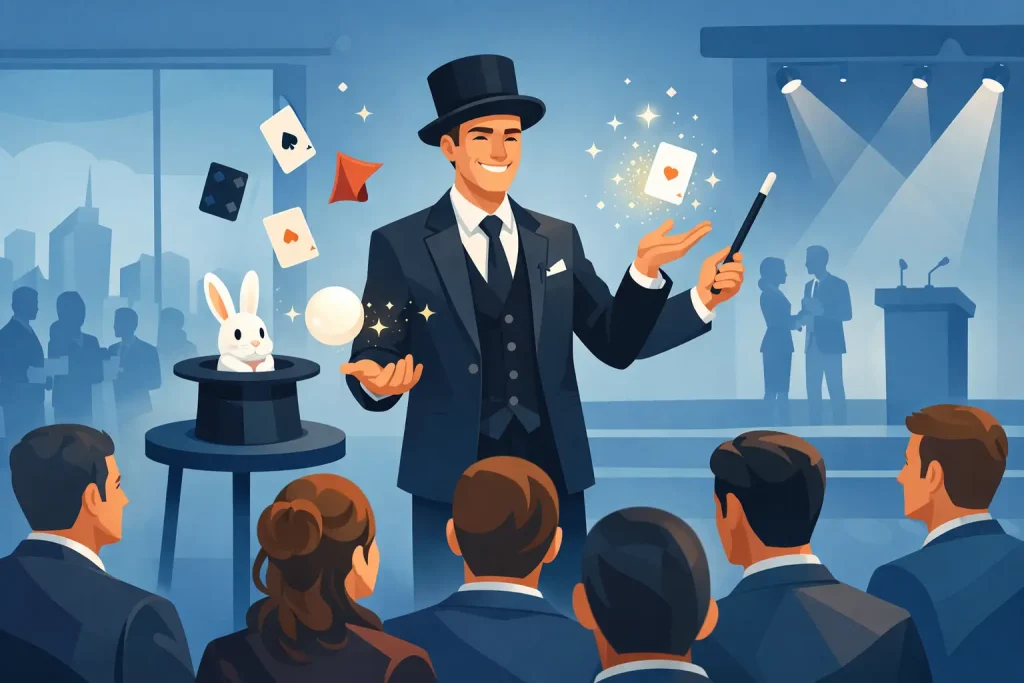
A conference room can look full and still feel empty. Attendees are checking email, slipping out early, or mentally moving on to the next session before the speaker reaches the final slide. A conference convention magician Mike Seege changes that equation by giving people a reason to look up, lean in, laugh, and participate.
This is not entertainment placed on the agenda as an afterthought. The right performer becomes part of the event strategy: raising energy after lunch, turning a difficult transition into a memorable moment, helping a sponsor command attention, or bringing a room full of strangers together before the real work begins. For planners carrying the pressure of a high-stakes corporate event, that difference is enormous.
What a Conference Convention Magician Does Differently
A corporate conference has different demands than a private party. The audience may include executives, sales teams, clients, prospects, and guests from multiple countries or departments. The schedule is tight. The venue team needs clear cues. The organizer needs a performer who can read the room without creating more work for anyone.
That is where business-focused magic earns its place. Instead of presenting a disconnected set of tricks, a polished conference magician builds moments around the purpose of the gathering. A fast, visual piece can reset attention before a keynote. Interactive close-up magic can turn a networking reception into a conversation starter. A customized presentation can make a product benefit or campaign theme more memorable than another printed handout ever could.
The result is participation, not passive applause. Attendees do not simply watch something happen. They experience it together, talk about it afterward, and attach that feeling to the event and the company that produced it.
Energy Management Is an Event Skill
Every conference has energy peaks and energy leaks. Opening sessions often start strong. Midafternoon sessions can struggle. A day of dense information may leave even a motivated audience restless by dinner. Great event programming accounts for those predictable shifts instead of hoping a coffee break will solve them.
A magician who understands conference flow can work as an energy manager. For a general session, that might mean a high-impact stage segment designed to bring the room back together quickly. At an awards dinner, it may mean building anticipation before recognition begins. During a reception, strolling magic gives guests an easy way to engage without forcing awkward networking exercises.
Timing matters as much as talent. A five-minute interactive moment placed before a major announcement can be more valuable than a 45-minute show placed where nobody has the attention span left for it. The best format depends on the schedule, room layout, audience size, and what needs to happen next.
For large rooms: create a shared moment
A headline-style corporate show gives a ballroom or theater one clear focal point. It is especially effective for opening nights, sales kickoffs, leadership summits, award programs, and conference finales. The audience gets a polished experience with laughter, surprise, and participation that reaches beyond the first few rows.
For receptions: make networking easier
Strolling and close-up magic work where people naturally gather: cocktail hours, hospitality suites, sponsor receptions, and client appreciation events. Small groups form quickly around a memorable moment. Guests who might otherwise stay with people they already know suddenly have a reason to meet someone new.
For transitions: keep the agenda moving
An emcee who can entertain is often the difference between a program that drags and one that feels intentional. Introducing speakers, filling technical pauses, acknowledging sponsors, and handling the unexpected all require confidence. When the host can keep the audience engaged without making the event about himself, the program feels tighter and more professional.
Trade Show Magic Has a Different Job
At a trade show, attention is currency. Your booth is competing with hundreds of exhibitors, flashing screens, giveaway bags, nearby presentations, and attendees on a mission to see only what they came for. A generic attraction may create a crowd, but a crowd that cannot be qualified is not automatically a win.
Customized trade show magic is built to do more than stop traffic. It can create a clear reason for attendees to pause, introduce a core message in a concise presentation, and give the sales team a natural handoff. The magic gets attention. The brand message gives that attention a purpose. The sales conversation turns the moment into an opportunity.
That handoff has to be designed before the show floor opens. Who is the ideal attendee? What question should the sales team ask after the presentation? What is the call to action: a demo, a meeting, a scan, or a product conversation? Without those answers, even a busy booth can produce weak results.
A strong trade show performer also understands pace. The presentation needs to be repeatable throughout the day, visible enough to attract a crowd, and short enough that prospects do not feel trapped. It should support the team on the floor rather than compete with them.
How to Choose the Right Format for Your Event
The question is not simply, “Do we need a magician?” The better question is, “What does this audience need to do, feel, or remember?” That answer determines the format.
If your biggest concern is low engagement during a general session, a stage-style presentation or interactive conference feature may be the right fit. If your goal is stronger guest interaction during a reception, close-up magic is often the smarter choice. If you need a consistent voice guiding a multi-speaker agenda, emcee services may carry more value than a standalone performance.
For exhibitors, the choice becomes even more specific. A booth needs attention, but it also needs a process for turning attention into qualified conversations. A customized trade show presentation is appropriate when the organization has a message worth repeating and a team ready to follow up.
Budget, venue restrictions, and audience culture matter too. A formal leadership event may call for sophisticated, polished material. A sales meeting can often support a louder, more playful experience. There is no one-size-fits-all answer, which is why a professional conversation before booking is more useful than selecting entertainment from a generic menu.
The Details That Protect Your Reputation
Event buyers are not only booking a performer. They are placing another moving part into an already complicated production. Reliability is part of the show.
Look for a partner who asks informed questions about run of show, staging, sound, lighting, arrival times, audience demographics, client expectations, and contingency plans. That preparation is what allows the performance to feel spontaneous while the logistics remain controlled.
The same applies to customization. A company logo on a screen is not meaningful customization. Stronger integration comes from understanding the event theme, the language the company uses, what the audience is being asked to believe, and which message deserves to stick after the applause fades.
For conferences in demanding event markets such as Las Vegas, Orlando, Chicago, Nashville, or New York City, experience with professional venues and tight production schedules can be especially valuable. These events move quickly. The entertainment needs to arrive prepared, work cleanly with the production team, and perform at the standard the room expects.
Make the Experience Worth Talking About
Corporate audiences have seen plenty of acceptable entertainment. They remember the moments that made them feel included.
That is why the strongest conference experiences are designed around human response: surprise, laughter, recognition, curiosity, and connection. Those reactions create a story attendees retell at dinner, on the flight home, and in the office the following week. For a planner, that is not fluff. It is evidence that the event made an impression.
Mike Seege brings that mindset to corporate magic, trade show engagement, emceeing, and team experiences. The goal is never to fill time. The goal is to make the room more responsive, the message more memorable, and the event easier to call a success.
When you are reviewing your next agenda, do not wait until the final open slot to think about audience engagement. Identify the point where attention matters most, then build a moment people will be glad they did not miss.