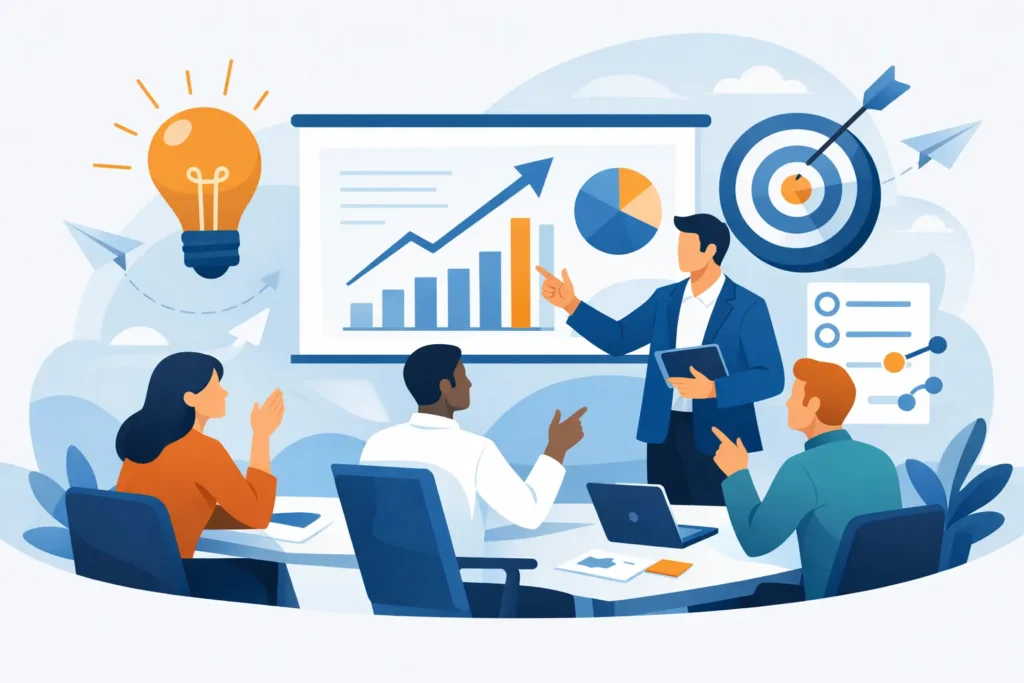
A sales meeting can lose the room before the first pipeline report appears on screen. People arrive carrying travel delays, customer objections, inbox pressure, and the memory of last quarter’s numbers. If you want to know how to energize sales meetings, the answer is not louder music or a longer coffee break. It is designing the meeting so people participate, feel momentum, and leave ready to have better conversations with customers.
For event planners and sales leaders, that distinction matters. A meeting that merely fills time becomes an expensive calendar block. A meeting that creates confidence, connection, and practical action can change how the team performs when the doors open and the prospects start asking hard questions.
Start With the Moment You Want to Create
Energy is not the same as noise. A packed agenda can feel frantic, while a focused meeting with the right interactive moments can feel electric. Before choosing speakers, slides, or entertainment, define the behavioral outcome you want from the sales team.
Do they need to believe in a new product launch? Reconnect after a difficult quarter? Improve cross-selling conversations? Build the confidence to work a demanding trade show floor? The goal should shape the experience.
For example, a national kickoff may need a high-impact opening that tells the team, immediately, that this is not another sit-and-listen meeting. A midyear strategy session may need a reset between dense training blocks. A smaller leadership retreat may need activities that reveal how people communicate under pressure. Each need calls for a different kind of energy management.
The mistake is treating engagement as decoration. When the activity, message, and meeting goal are disconnected, attendees may enjoy the break but forget why it happened. The strongest programs make the experience reinforce the point you need people to remember.
How to Energize Sales Meetings Before the First Slide
The first 10 minutes set the standard for everything that follows. If attendees walk into a dim room, find a chair, and stare at a holding slide for 20 minutes, you have trained them to be passive before the meeting begins.
Create an arrival experience with a purpose. Use upbeat music, visual prompts, a simple conversation question on screen, or a host who gives people a reason to engage with colleagues they do not usually see. If the group is large, ask regional teams to submit a quick win or a customer lesson before the event and feature a few in the room. Recognition gets attention because it is real.
Then open with pace. Avoid spending the first quarter-hour on housekeeping and sponsor acknowledgments. Handle logistics in the event app, printed agenda, or a concise announcement after the room is already engaged. Start with the business challenge, a customer story, a bold result, or an unexpected interactive moment that earns attention.
A professional emcee can be especially valuable here. The right host does more than introduce speakers. They establish trust, make transitions feel intentional, bring the room back after breaks, and protect the audience from the dead air that drains a sales meeting fast.
Break Up Information Before It Becomes Wallpaper
Sales teams need information. They need product updates, territory data, pricing changes, competitive intelligence, and leadership direction. The issue is not content. The issue is uninterrupted content.
A useful rule: change the mode of the room every 20 to 30 minutes. That does not mean forcing a game after every presentation. It means moving from listening to discussing, deciding, practicing, reacting, or asking questions before attention fades.
After a product presentation, have pairs practice a 60-second customer explanation. After a market update, ask tables to identify the objection they expect to hear most often. After a leadership message, collect questions live and answer the ones people are actually thinking about. These short shifts make attendees process the material instead of simply receiving it.
Keep instructions tight. Salespeople know when an exercise is filler. Give them a clear objective, a time limit, and a practical output they can use. If an activity does not help them sell, collaborate, or make a better decision, it probably does not belong on the agenda.
Use Friendly Competition Without Turning Adults Into Contestants
Competition can sharpen the room, especially with a sales audience. But it works only when it feels relevant and fair. Public scoreboards, team challenges, and recognition can generate momentum. They can also frustrate people if the same few top performers dominate every activity.
Build challenges around knowledge, teamwork, or customer thinking rather than just individual sales rankings. A rapid-fire objection-handling exercise, a product-message challenge, or a team-based scenario can put veteran sellers and newer representatives on more equal footing. The objective is not to manufacture pressure. It is to let people practice winning together.
Recognition should be specific. Instead of vague praise, highlight the behavior that deserves repetition: the rep who protected margin, the manager who coached a difficult account, the team that uncovered a new opportunity, or the person who turned customer feedback into a better pitch. Specific recognition tells the room what success looks like.
Build a Strategic Energy Reset Into the Agenda
The after-lunch slump is predictable. So is the late-afternoon attention drop after three consecutive speakers. Planning around these moments is one of the simplest ways to make an event feel more polished.
Do not schedule your most important message immediately after a heavy meal and hope the slides will carry it. Put an interactive reset there instead. This could be a facilitated activity, a short audience-driven performance, a movement-based exercise, or a surprising moment that gets people laughing and talking before they return to business.
For larger meetings, interactive corporate entertainment can do more than wake people up. A well-designed magic presentation, for instance, can illustrate perception, communication, problem-solving, or the value of seeing a customer situation differently. The entertainment earns its place when it is customized to the meeting theme and followed by a clean handoff to the next business message.
That is the trade-off: a generic act may get a few laughs, but a purposeful experience creates a shared reference point people repeat long after the event. When a sales manager says, Remember what happened during that moment on stage, the lesson returns with it.
Give Salespeople a Voice in the Room
A sales meeting loses credibility when headquarters talks at the field for two days. Your frontline team knows where customers hesitate, what competitors are saying, and which messages are landing. Put that intelligence on stage.
Feature short field stories with a clear format: the situation, the customer challenge, what the rep did, and what others can take away. Keep them brief and coached. A five-minute story with a useful lesson is stronger than a 20-minute ramble about a single account.
Live polling also helps, particularly when leadership needs an honest temperature check. Ask where confidence is high, where training is needed, or which objection is appearing most often. Anonymous responses can surface issues people may not raise at a microphone.
Make room for questions, but curate them. Let attendees submit questions throughout the day, group similar themes, and have leaders answer directly. That approach is more productive than ending every session with a rushed request for questions while people stare at their shoes.
Protect the Pace Between Sessions
Most agenda problems are not created by keynote speakers. They happen in the transitions. A presenter runs long. The next speaker searches for a cable. People return slowly from break. The room waits. Energy leaks out one awkward minute at a time.
Assign ownership for every handoff. Speakers should know exactly when and where they are entering, what is on screen, and how much time they have. A stage manager, emcee, or experienced event partner can keep the room moving while solving problems that attendees should never notice.
Be disciplined about breaks, too. Give people enough time to recharge, check messages, and use the restroom. Then make the return worthwhile. A visible countdown, a strong walk-on, and a clear reason to come back can prevent the slow drift that turns a 15-minute break into 30.
End With a Commitment, Not a Farewell
The final session should not be a soft landing filled with thank-yous and travel reminders. It should turn the meeting’s best ideas into a next move.
Ask attendees to identify one action they will use in the next customer conversation, one teammate they will follow up with, or one obstacle they need leadership to remove. Have managers collect those commitments and revisit them in the weeks after the meeting. Without follow-through, even the most exciting event becomes a pleasant memory rather than a performance tool.
A strong close can also bring the room back together emotionally. Celebrate wins, reinforce the standard, and leave people with a simple message they can repeat to themselves before their next call. Keep it direct. Sales teams do not need a slogan they cannot use. They need belief, clarity, and momentum.
The best sales meetings feel less like an obligation and more like a competitive advantage. Build the agenda around participation, pace, and a few memorable moments that support the business goal. When your people walk out more connected to the message and more confident in the field, the energy in the room becomes energy in the pipeline.