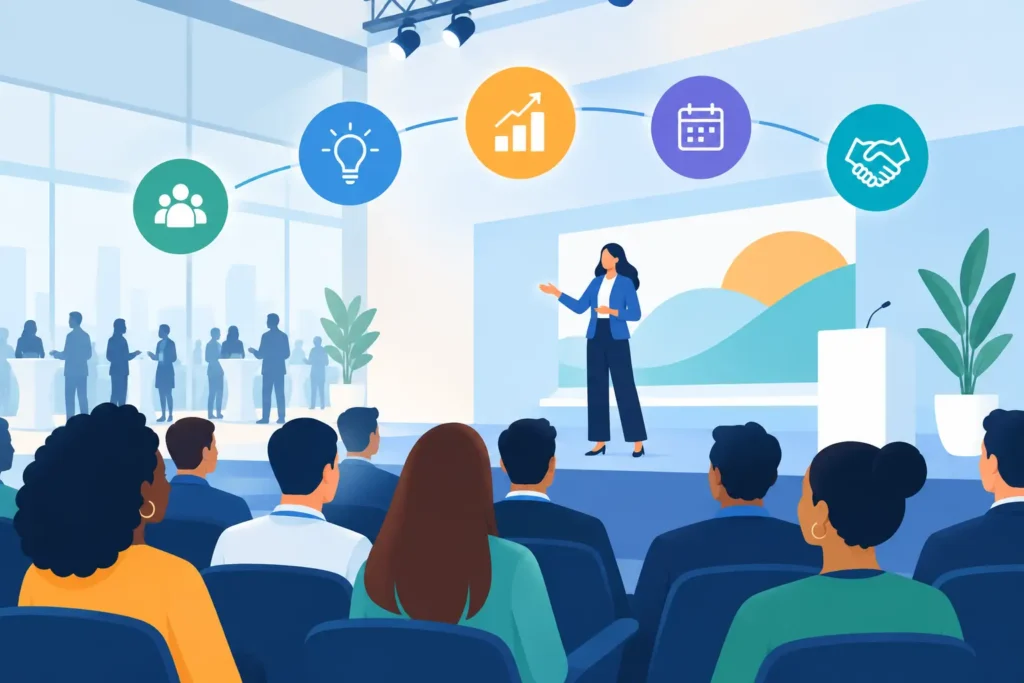
A packed ballroom can still feel flat. A beautiful trade show booth can still be ignored. And a conference agenda full of capable speakers can still lose the room by 2:30 p.m. That is why event experience trends matter to corporate planners: attendees no longer judge an event by the venue, catering, or tote bag alone. They remember how it made them feel, what it invited them to do, and whether it gave them a story worth repeating.
For planners, marketers, and meeting leaders, the shift is clear. Passive programming is losing ground to purposeful participation. The goal is not to add entertainment for the sake of entertainment. It is to create energy, connection, brand recall, and measurable movement toward the business outcome your event exists to deliver.
Event Experience Trends Are Becoming More Participatory
The biggest change is simple: audiences expect to be part of the action. They have spent years watching content through a screen, scrolling past ads, and filtering out anything that feels generic. At a live event, they want a reason to look up, lean in, and engage with the people around them.
That does not mean every attendee wants to be pulled onstage. Forced participation can make a room uncomfortable fast, especially with executive audiences or mixed groups. Smart engagement gives people choices. It creates moments that are easy to enter, rewarding to share, and respectful of different personalities.
At a reception, that may look like sophisticated close-up magic that gathers small groups naturally and starts conversations before dinner. At a conference, it may mean an emcee who uses quick audience interaction to reset attention between sessions. On a trade show floor, it can mean a short branded presentation that stops traffic and gives prospects a reason to remain at the booth long enough for a real conversation.
The common thread is active attention. People remember what they experience, not what they merely sit through.
The new standard is intentional interaction
Interactivity works best when it has a job. A team-building activity should help people communicate, solve problems, or collaborate across departments. A stage moment should reinforce a meeting theme or wake up a post-lunch audience. A booth attraction should create a clean handoff to the sales team.
This is where many events miss the mark. They invest in something visually impressive but leave no plan for what happens after the applause. The experience earns attention, but the opportunity disappears. Build the follow-up into the design: who greets attendees, what information is captured, what question starts the sales conversation, and how the brand message is repeated.
Personalization Is Replacing One-Size-Fits-All Programming
Corporate guests can spot generic entertainment from across the room. The strongest event experiences now reflect the company, the audience, and the moment. A sales kickoff should not feel like a holiday party. A customer appreciation event should not feel like an internal leadership meeting.
Personalization can be subtle. It may be a presentation built around your product language, a trick that reveals a campaign message, or an emcee who understands the names, goals, and pressure points behind the agenda. It can also be more visible, such as a custom trade show performance that incorporates product benefits into a memorable demonstration.
The point is not to force a logo into every minute. Heavy-handed branding turns an experience into a commercial. The better approach is to make the message part of the payoff. When the audience is surprised, laughing, and fully engaged, they are more likely to retain the idea connected to that moment.
For marketing teams, that creates a useful test: if the performer, activation, or activity could be dropped into any company event without changing a word, it may not be doing enough for your brand.
Event Experience Trends Put Energy Management on the Agenda
Energy is not an accidental byproduct of a great event. It is something you manage.
Conference planners know the pattern. The morning begins with focus. Midday brings mental drift. A long awards segment, a delayed meal service, or one speaker who runs over can drain the momentum from the entire afternoon. Once the room checks out, getting people back is difficult.
More event teams are planning energy shifts as carefully as they plan AV cues. They are using shorter program blocks, more deliberate transitions, unexpected moments, and hosts who can read the room. The best emcees do more than announce the next speaker. They protect the pace, create anticipation, handle changes without panic, and keep the audience connected to the purpose of the day.
Entertainment belongs in this strategy when it is placed with intention. A high-impact opening can establish the tone. Interactive moments between content blocks can give the room a reset. A strong closing can leave attendees with the feeling that the investment of time was worthwhile.
There is a trade-off, of course. Too many interruptions make an agenda feel scattered. The answer is not to fill every gap. It is to identify the moments where attention is most likely to fade, then use a relevant, polished experience to bring the room back together.
Trade Show Experiences Must Earn the Conversation
Trade show managers are facing a tougher version of the same challenge. More exhibitors are competing for limited attention, while attendees move quickly and decide in seconds whether a booth is worth their time.
Giveaway items and oversized graphics still have a place, but they rarely create the kind of crowd that converts on their own. The most effective booth experiences give attendees a reason to stop now, not later. They create visible activity, build curiosity from the aisle, and provide a natural bridge to a qualified conversation.
A customized magic presentation is especially effective because it can be repeated throughout the day, attract groups without a hard sell, and incorporate a product message into the experience itself. But the real value is the handoff. When a performer can create a crowd, identify interest, and introduce warm attendees to the sales team, the booth becomes more than an attraction. It becomes a lead-generation engine.
To make that work, sales and marketing must agree on the plan before the doors open. Define what qualifies as a useful lead. Decide who approaches guests during or after the presentation. Prepare a concise conversation starter that feels helpful rather than scripted. And make sure lead capture is fast enough that it does not kill the momentum.
A crowd is valuable. A crowd with a conversion plan is better.
Memorable Moments Need a Human Reason to Be Shared
Event planners often hear that every activation should be “shareable.” That idea is useful, but it is also incomplete. People do not share an experience simply because there is a photo backdrop nearby. They share something because it made them laugh, surprised them, made them look good, or connected them with other people.
The most share-worthy moments are not always the loudest. A guest may remember an impossible close-up moment at a cocktail reception because it broke the ice with a new client. A team may talk about a collaborative challenge because it revealed unexpected strengths. A conference audience may post about a closing moment because it gave the event a genuine emotional finish.
Design for the story, not just the photo. Ask what attendees will say when a colleague asks, “How was the event?” If the answer is only “the food was good,” the experience probably did not create enough distinction.
Technology Should Support the Room, Not Compete With It
AI-driven recommendations, event apps, digital displays, gamification, and audience polling can make an event more responsive. They can also create friction when attendees are asked to download, scan, log in, and click their way through every interaction.
The right level of technology depends on the audience and the event objective. A large conference may benefit from live polling that gives attendees a voice and supplies organizers with immediate insight. A trade show team may use a simple lead-capture system that helps staff follow up quickly. A smaller executive dinner may need almost none of it because the value lies in direct conversation.
The rule is straightforward: technology should make participation easier or make the event more relevant. If it creates another barrier between people, it is not improving the experience.
Measure More Than Attendance
Attendance tells you who entered the room. It does not tell you whether the room came alive.
Build success measures around the outcome you need. For a trade show, that may include qualified conversations, scanned leads, demos booked, and post-show follow-up rates. For a conference, it may be session participation, attendee feedback, sponsor engagement, or how long people remain in key programming. For an internal event, measure connection through participation, manager feedback, and whether employees continue talking about the experience afterward.
Not every result fits neatly into a spreadsheet. Strong brand recall and a room full of energized people still matter. But when you can connect an experience to leads, engagement, retention, or better audience response, it becomes far easier to defend the budget and plan an even stronger event next time.
The best event experience trends are not about chasing whatever looks new. They are about making guests feel seen, involved, and glad they showed up. Start with the business result you need, then choose the live moment that gives your audience a reason to care.