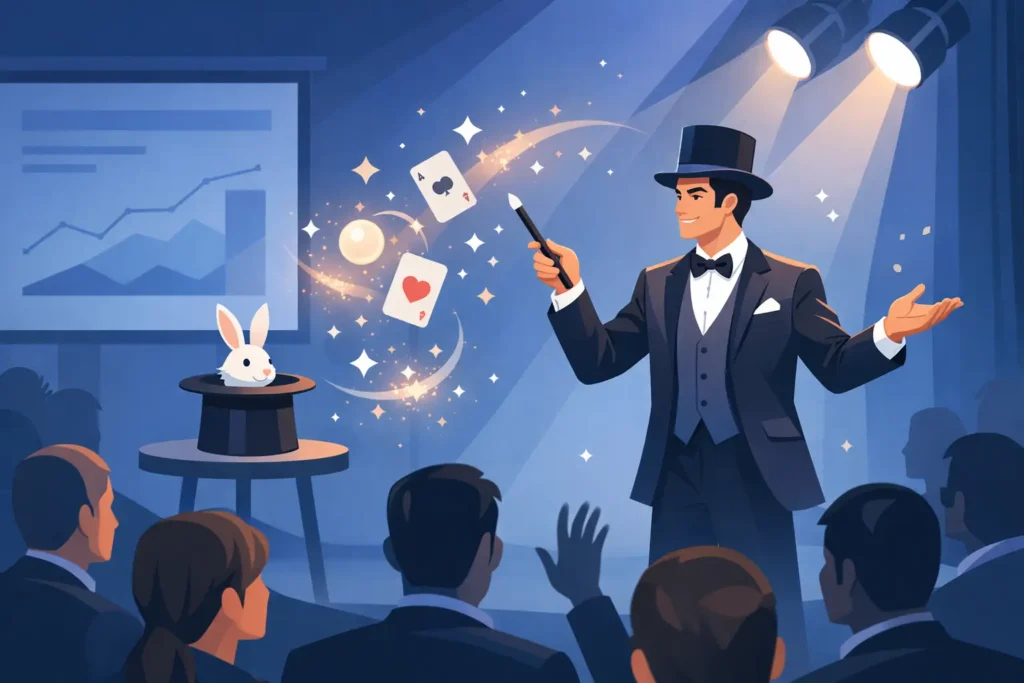
A ballroom full of smart people can still feel flat by 2:30 p.m. The lunch break runs long, phones come out, and the next speaker faces a room that needs energy before it needs another slide. A convention magic magician changes that equation. Done well, magic is not a random interruption. It is a strategic way to reset attention, create shared moments, and make your event feel like it was built for people, not just schedules.
For conference planners, marketing teams, and executive assistants, that difference is measurable. Better audience participation means stronger speaker transitions. Stronger engagement means attendees remember the message, talk about the event afterward, and are more likely to return to the room for what comes next.
What a Convention Magic Magician Actually Does
The right performer does more than present tricks on a stage. They read the room, understand the run of show, and use interaction to give the audience a reason to look up, laugh, respond, and stay present.
At a large convention, magic can work in several ways. A high-energy stage presentation can open a general session, break up a content-heavy agenda, or provide a memorable close. Close-up magic can activate a reception, hospitality suite, sponsor lounge, or dinner before guests settle into their assigned tables. An experienced magician can also serve as an emcee, using short moments of impossible visual magic to keep transitions crisp and the audience moving with the program.
The format depends on the job. A 1,500-person sales kickoff needs a different approach than a 150-person leadership retreat. An exhibit hall needs a different solution than a plated awards dinner. The common goal is not simply applause. It is keeping people engaged where and when the event needs them most.
Why Magic Works at Conventions
Most conventions are competing with information overload. Attendees arrive with packed calendars, overflowing inboxes, and more sessions than they can reasonably absorb. Even excellent content can lose momentum when every hour follows the same pattern: speaker, screen, Q&A, break, repeat.
Magic interrupts that pattern without asking attendees to work harder. It creates immediate curiosity. People lean in because they want to know what happens next. Then, when the effect lands, the room shares a genuine reaction at the same time. That collective response is valuable at an event where people may know the company but not each other.
There is also a practical advantage. A skilled performer can turn passive audience members into participants without putting anyone in an uncomfortable spotlight. The best corporate magic is built around voluntary interaction, smart humor, and clear boundaries. It makes attendees feel included, not exposed.
For planners, that is a major distinction. You need entertainment that adds energy without creating a recovery problem for the next presenter. The goal is not chaos. The goal is controlled momentum.
Make the Entertainment Support the Event Goal
A convention magician should be selected the same way you would select any high-visibility partner: based on the outcome you need. “We want something fun” is a start, but it is not a brief.
If your priority is a stronger opening, the performance should establish energy, confidence, and audience buy-in quickly. If your priority is sponsor visibility, the material should create natural moments for branded recognition without turning into an awkward commercial. If the challenge is attendance after lunch, the performer needs material designed for a fast reset, not a slow buildup.
For trade show exhibitors, the goal is even more direct: stop qualified prospects, deliver a concise message, and hand warm conversations to the sales team. In that setting, magic is not just entertainment. It is a crowd-building mechanism with a clear path to lead capture.
A professional should ask about your audience, agenda, venue, technical setup, brand language, and non-negotiables before suggesting a format. Those questions are not red tape. They are what separate a business-focused performance from a generic act dropped into a corporate room.
Build Brand Messaging Into the Right Moments
Customization works best when it is purposeful. A product name, campaign theme, or central business idea can become part of a visual reveal, a callback, or a memorable audience moment. Used sparingly, it reinforces the message because the audience experiences it rather than merely hears it again.
There is a trade-off. Overloading every routine with branding can make the performance feel forced. The strongest approach identifies one or two messages worth elevating and gives them room to land. Your attendees should remember the moment and the brand connection, not feel as though they sat through another advertisement.
Where Magic Has the Biggest Convention Impact
General sessions are the obvious placement, especially when a meeting needs a confident opening or a high-energy return from break. But some of the highest-value magic happens outside the main stage.
At a welcome reception, close-up magic gives guests an easy reason to start conversations. Instead of standing with familiar colleagues or checking their phones, they gather around an unexpected shared experience. That helps new attendees feel part of the event faster.
At a sponsor event or VIP dinner, the performance can feel exclusive without becoming intrusive. Table-side magic creates premium interaction in small groups and avoids the problem of asking guests to stop networking for a formal show.
In exhibit halls, a customized presentation can turn a quiet booth into a destination. The performer attracts attention, holds it long enough for the key message, and creates a clear handoff to a sales representative. That handoff matters. A crowd is only useful when your team is prepared to start the conversation, scan the badge, and follow up.
For multi-day conferences, an emcee-magician can be especially effective. Rather than bringing in a performer for one isolated segment, you can use short, repeatable energy moments to introduce speakers, manage awards, fill technical delays, and keep the agenda from feeling mechanical.
What to Look for Before You Book
The best convention entertainment is not always the biggest production. It is the performer who understands the assignment, respects the schedule, and can adapt when the room changes.
Look for corporate experience, not just impressive social media clips. A performer may be excellent in a theater or private party setting and still struggle with a convention audience, union venue requirements, executive stakeholders, tight transitions, or a room full of people who have just eaten lunch.
Ask how the performer handles technical needs. A polished show should come with clear expectations for staging, sound, lighting, screen content, rehearsal time, and audience configuration. If the event is in a cavernous ballroom, the performer needs to know how to play big. If the setting is a narrow reception space, they need material that works up close without stopping traffic.
Also ask how they work with your team. Will they coordinate with the AV lead? Can they adjust for a delayed keynote? Do they know when to shorten a segment without losing impact? Event planners do not need another vendor to manage. They need a dependable partner who makes the room feel easier to run.
A company such as Mike Seege approaches convention magic with that business-first mindset: build the audience, support the message, and keep the event moving forward.
Give Your Performer the Information That Creates Results
Great results start with a useful briefing conversation. Share the event’s purpose, audience profile, agenda pressure points, desired tone, brand phrases, and any content that must be avoided. Mention whether leadership wants polished and sophisticated, high-energy and funny, or a balanced mix of both.
Be candid about the room. Is attendance voluntary? Are guests arriving from a cocktail reception? Is the audience primarily salespeople, engineers, franchise owners, or senior leaders? A seasoned performer uses those details to calibrate pacing and interaction.
If the performer is supporting a trade show booth, involve the sales team early. Define what counts as a qualified lead, decide how the handoff will work, and make sure the team has enough coverage when the crowd forms. Magic can create attention quickly. Your operation needs to be ready to convert that attention into meaningful conversations.
The Real Value Is What Happens After the Applause
A memorable convention moment does more than fill a gap on the agenda. It gives attendees a story to tell at dinner, a reason to return after break, and a positive association with the company that brought them together. That is especially valuable when budgets are scrutinized and every program element needs to justify its place.
The smartest event entertainment does not compete with your message. It creates the conditions for that message to be heard. When you are planning the next general session, reception, exhibit experience, or leadership meeting, ask one practical question: where does the audience need more energy, attention, or connection? That is where magic earns its place.