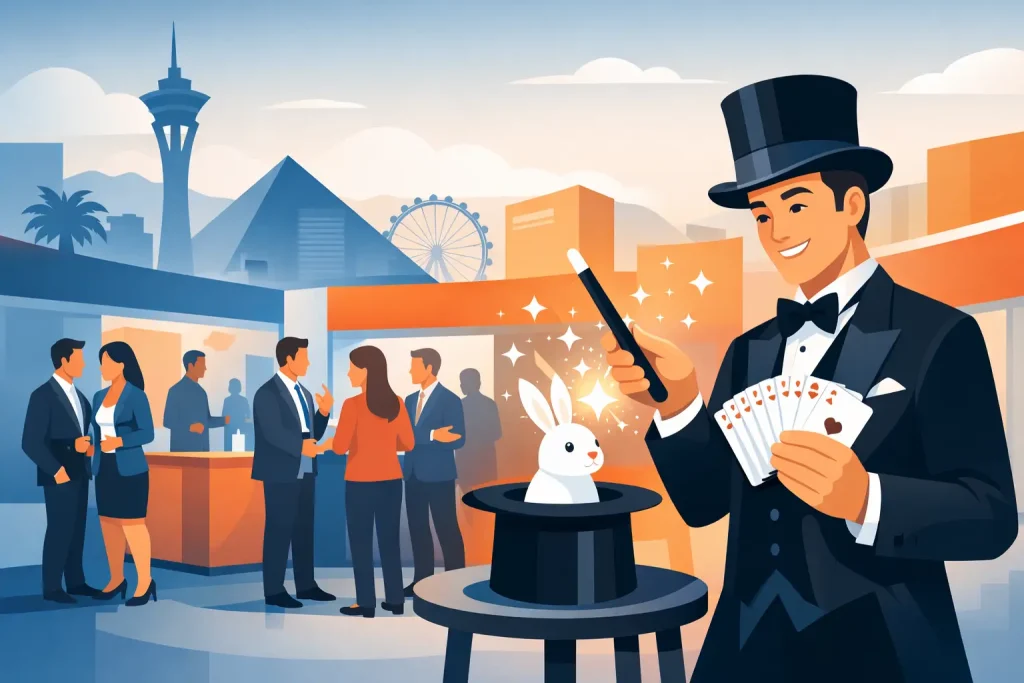
The aisle is full. Your competitors have bright graphics, giveaways, espresso bars, and a sales team hoping someone stops long enough to listen. A trade show magician Las Vegas exhibitors hire changes that equation by giving attendees a reason to gather, watch, react, and then talk. The trick is not simply creating a crowd. The real job is turning that crowd into conversations your team can use.
Las Vegas trade shows move fast and ask a lot of everyone on the floor. Attendees are overscheduled, overstimulated, and often headed toward their next appointment before a standard booth pitch has a chance. Entertainment that earns attention in seconds can give your brand the opening it needs. When the presentation is built around your message, magic becomes a sales-support tool, not background noise.
Why a Trade Show Magician in Las Vegas Changes Booth Traffic
A busy booth creates social proof. People naturally want to know what is drawing a group together, especially on a show floor where every exhibitor is fighting for attention. A polished magician creates those small, visible moments of surprise that make passing attendees pause. Once they stop, curiosity does the rest.
But a crowd alone is a vanity metric. A capable corporate trade show performer knows how to build a short presentation around a product benefit, a campaign theme, or a specific problem your company solves. The effect earns attention. The message gives that attention a purpose. Your sales team receives a warmer handoff because the attendee is already engaged instead of trying to escape a cold introduction.
That distinction matters in Las Vegas. Large conventions can deliver massive attendance, but they also create enormous competition for attention. An exhibitor with a capable team and a great product can still get overlooked if the booth experience feels like every other booth experience. A strategic performance gives people a story to repeat later: “You have to see what they are doing over there.”
The Best Booth Magic Has a Job to Do
The strongest trade show programs start with an objective, not a deck of cards. Are you launching a product? Trying to drive demos? Collecting qualified leads? Creating energy during a slow afternoon stretch? The answer determines the format.
A short, repeating booth show works well when your goal is to build visible crowds at scheduled intervals. A performer can gather attendees, deliver a tight branded routine, and direct the audience toward a demonstration, scan station, or conversation with the sales team. This approach is particularly effective for companies with a clear product story that can be communicated in a few memorable beats.
Strolling close-up magic may be the better fit when your booth is compact, your product requires more one-on-one explanation, or your team wants to reach people at a reception, hospitality suite, or private client event. Instead of asking attendees to commit to a scheduled show, the performer creates personal moments that open a natural conversation.
Neither format is automatically better. A large booth with a visual product and a packed show schedule may benefit from recurring presentations. A high-value B2B service, where every meaningful prospect deserves more time, may get more value from close-up engagement and deliberate sales handoffs. The right choice follows the sales process.
Brand messaging cannot feel bolted on
Attendees can spot a generic pitch from across the aisle. If the magic pauses for an awkward product monologue, the energy disappears. The message needs to be built into the presentation so it feels like the payoff, not an interruption.
That may mean revealing a key phrase, illustrating a product benefit, incorporating branded materials, or structuring the routine around the challenge your customer faces. The best custom trade show magic makes the audience remember both the moment and the company behind it. They should not walk away saying, “The magician was great,” while forgetting which booth hosted the experience.
A good performer will ask smart questions before the show: Who is the ideal attendee? What does your company solve? What must people remember after 30 seconds? What action should they take next? Those questions turn entertainment into a focused part of the exhibit strategy.
Plan the Handoff Before the Crowd Arrives
The sales handoff is where many exhibitors leave results on the table. A performer can gather 40 interested people, but if the team is not ready with a clear next step, the crowd disperses and the opportunity vanishes.
Assign a specific role to every booth team member during presentations. One person should welcome people at the edge of the crowd. Another should identify likely prospects. A third should be ready to scan badges, schedule demos, or answer the first question after the show. The entertainer can point attendees toward that next action, but the team must make it easy to follow through.
Keep the ask simple. “See the live demo in two minutes,” “Get your personalized assessment,” or “Talk with our specialist about your current workflow” gives people a clear reason to stay. A vague invitation to “learn more” produces vague results.
It also helps to brief the performer on qualifying language. If your priority is enterprise buyers, decision-makers in a particular industry, or current users of a competing platform, the show can invite the right people into the next conversation without turning the presentation into a sales lecture.
What to Look for When Hiring a Trade Show Magician Las Vegas
Las Vegas has no shortage of entertainment. That does not mean every magician is prepared to work a corporate exhibit. Stage talent, restaurant magic, and trade show performance are different jobs with different demands.
Look for someone who understands repeatability. A trade show performer may deliver the core experience many times a day while staying sharp, personable, and on message. The schedule needs to work around demos, keynote sessions, meal breaks, and unpredictable floor traffic. Professional flexibility is not a bonus here. It is part of the service.
You also need a performer who can read a room. Some groups will be ready for a high-energy presentation. Others will respond better to quick, personal interactions. A rigid act can feel disconnected from the pace of the booth. An experienced corporate entertainer adjusts while protecting the message and the schedule.
Ask practical questions before booking. How will the branded material be incorporated? What space, sound, and staffing are required? How often will shows run? How are leads handed to the team? What happens during a packed aisle or a quiet stretch? The answers reveal whether you are hiring a strategic partner or simply booking an act.
Mike Seege approaches trade show magic with those business questions in mind: draw attention, make the message memorable, and help the sales team meet people worth talking to.
Avoid the giveaway trap
Giveaways can attract traffic, but they often attract people who want a giveaway. That is not always the same as attracting qualified prospects. Entertainment creates a stronger filter when it is connected to your message and followed by a useful next step.
This does not mean giveaways have no place. A thoughtful item can reinforce the experience or reward a meaningful conversation. The mistake is making the giveaway the entire reason people visit. If your booth has no story beyond free merchandise, your team will spend the day scanning badges without building much pipeline.
Measure More Than Foot Traffic
A trade show magician can make traffic highly visible, which is one reason exhibitors love the format. But measurement should go beyond a crowded aisle. Set a baseline for the outcomes that matter before the event begins.
Track badge scans during performance windows compared with non-performance windows. Note how many scans meet your qualification criteria. Count scheduled demos, follow-up meetings, and opportunities that move forward after the show. Ask the sales team whether conversations began more easily after a performance. These numbers help determine whether the activation created real commercial value.
There is a trade-off: a packed crowd may not always produce the deepest conversations in the moment. For complex or high-consideration offerings, use the performance to create the first connection, then move interested prospects to a quieter demo area or arrange a scheduled follow-up. The show opens the door. Your sales process takes it from there.
Make Your Booth the Moment People Remember
The best exhibit experiences do not demand attention with more noise. They give busy people a worthwhile reason to stop. In a city built on live spectacle, that reason has to be polished, relevant, and connected to a business goal.
Bring a clear message, a prepared sales team, and a performer who knows how to make both matter. When attendees leave your booth smiling, repeating your key idea, and asking what happens next, the show floor has finally started working for you.