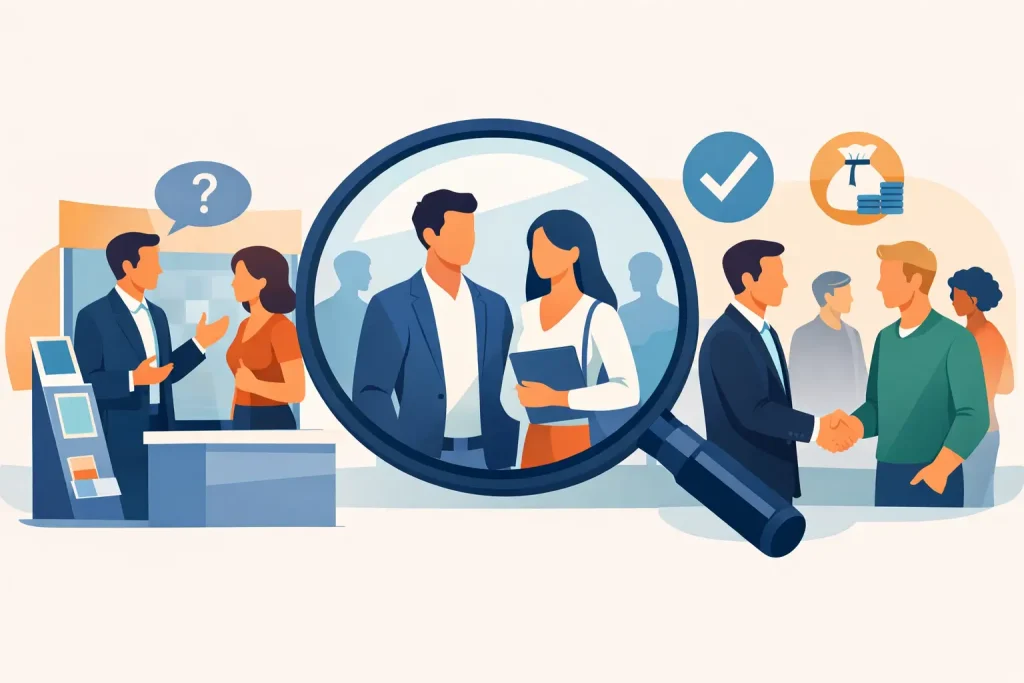
A packed booth can look like a win right up until the sales team opens the lead report. If half the scans belong to students, job seekers, competitors, or people collecting giveaways, the crowd did not create pipeline. Learning how to qualify booth visitors means turning attention into useful conversations while the event is still happening.
The goal is not to interrogate every attendee at the aisle. It is to create enough interest that the right people stop, then give your team a simple, confident way to identify fit. Great booth qualification protects your sales team’s time, improves follow-up, and gives leadership a more honest picture of trade show ROI.
Start With a Definition of a Qualified Visitor
Before the show floor opens, agree on what makes someone worth a sales conversation. This sounds obvious, but many teams arrive with a product pitch, a badge scanner, and no shared standard for a quality lead.
For most exhibitors, qualification comes down to four factors: role, need, authority, and timing. Does this person influence or own the buying decision? Do they have a problem your company solves? Can they access budget or bring in the people who can? Is there an active project, upcoming renewal, expansion, or operational issue that gives the conversation urgency?
Not every strong visitor will check every box. A director may have a clear need but no immediate timeline. A hands-on user may not approve a purchase but could become an internal champion. The point is not to force every person into a yes-or-no box. It is to know whether the next step should be a quick resource, a product expert, a scheduled demo, or a sales follow-up after the show.
Build three lead categories before you leave for the event: priority opportunities, developing opportunities, and general contacts. Give each category a clear definition. If the team cannot explain the difference in one sentence, the system is too complicated for a busy exhibit hall.
Use Engagement to Earn the Conversation
The biggest qualification mistake is asking serious questions before you have earned the visitor’s attention. Attendees have been stopped all day. They can spot a scripted opener from ten feet away.
This is where live engagement changes the equation. A customized trade show magic presentation, a product demonstration with personality, or an interactive moment gives people a reason to pause. More importantly, it creates a natural transition. Instead of, “Can I ask what you do?” your team can say, “What brought you to the show?” or “Which part of that problem sounds familiar in your world?”
The performance is not the qualification process. It is the crowd-building engine that makes qualification possible without making the booth feel like an intake desk. A strong trade show performer can gather a group, deliver a branded message, and hand interested guests to the sales team when they are already engaged and receptive.
That handoff matters. The sales representative should know exactly what was presented, what question to ask next, and how to recognize a warm visitor from someone who simply enjoyed the show.
Ask Questions That Move the Conversation Forward
Good booth questions are short, relevant, and easy to answer in a noisy environment. Avoid questions that feel like a form. “What is your annual budget?” is rarely the right opener. Start wide enough to invite a real response, then narrow the conversation based on what you hear.
Try an opener connected to the event or the problem you solve: “What are you hoping to improve this year?” “Are you here looking for a solution, or checking out what is new?” “How are you handling that process today?” These questions reveal context without putting the attendee on the defensive.
Once the visitor identifies a pain point, ask a practical follow-up. “Who else is involved when you evaluate a change like that?” “Is this something you are working on now or planning for later this year?” “What would a better result look like for your team?”
Listen for specifics. A visitor who says, “We are always looking” may be a useful contact, but a visitor who says, “Our current contract ends in October and our operations team is frustrated” deserves a different level of attention. Train staff to capture the actual words used by the attendee. Those notes are more valuable than a generic lead score entered after a long day.
Keep Qualification Human, Not Mechanical
There is a trade-off. Ask too little and your team collects a mountain of vague contacts. Ask too much and you kill the momentum that got the visitor into the booth in the first place.
A practical rule is to aim for one meaningful need, one indication of role or influence, and one next-step signal. If the visitor is clearly qualified, bring in the right person quickly. If they are not, end warmly and leave them with a useful reason to remember your brand. Every interaction does not need to become a pitch.
Give Every Booth Role a Job
A high-performing booth does not rely on everyone doing everything. Crowd builders, qualifiers, product specialists, and lead capturers should understand where their responsibilities begin and end.
The crowd builder creates energy and invites people in. This may be a presenter, a trade show magician, or a team member trained to start conversations. The qualifier identifies fit and decides whether to advance the conversation. The specialist handles deeper questions and demonstrations. The lead capturer records accurate details and confirms the next step before the visitor walks away.
At a smaller booth, one person may cover more than one role. That is fine, as long as the process is clear. The danger comes when the most knowledgeable salesperson is trapped entertaining unqualified foot traffic while the best prospect in the aisle walks past.
Hold a short team huddle at the beginning and end of each show day. Review what qualified visitors are saying, which job titles are appearing, what objections are repeating, and whether the lead categories still make sense. The best trade show teams adjust in real time.
Create a Handoff That Does Not Lose Momentum
A visitor should never have to repeat their story three times. When a qualifier introduces someone to a product expert, make the transition specific: “Jordan leads operations for a regional manufacturer and is evaluating options before an October renewal. Jordan, this is Maya, who works with teams facing that exact transition.”
That ten-second handoff tells the visitor they were heard and gives the specialist a running start. It also makes the booth feel organized, which matters when you are asking a prospect to trust your company with an important decision.
If the specialist is unavailable, do not leave a hot lead standing around. Schedule a specific return time, offer a short meeting nearby, or capture the details with a stated promise: “Our solutions lead is tied up for ten minutes. Would 2:30 work, or should we reserve a demo time after the show?” A vague “we will follow up” is not a next step.
Capture Context, Not Just Contact Information
Badge scans are convenient, but they are not qualification. A scanned badge without notes is often just proof that someone stood near your booth.
Your lead form should make it fast to record the details that shape follow-up: the visitor’s challenge, current approach, role in the decision, timeline, products discussed, and agreed next step. Use short selectable fields where possible, but include a note field for the phrases and details that make the conversation personal.
Also identify the source of the lead. Did the person stop for a live presentation, request a demo, attend a scheduled meeting, or get referred by another attendee? This helps you measure what actually created qualified traffic. If a live attraction brings large crowds but generates few conversations, the messaging or handoff may need work. If it consistently creates warm introductions to decision-makers, it is doing far more than entertaining.
Measure Quality After the Show, Not Just Volume
The real test of booth qualification happens after the exhibit hall closes. Track how many leads receive a meaningful follow-up, book a meeting, enter an active opportunity, and become customers. Then compare those outcomes by lead category, day, staffing pattern, and engagement source.
Do not punish the team for fewer scans if those scans lead to more meetings. A booth that collects 75 well-documented opportunities can outperform one that gathers 600 names with no context. Volume has a place when brand awareness is the goal, but lead generation requires a higher standard.
Review the results with sales while the event is still fresh. Ask which questions surfaced the best opportunities, where handoffs broke down, and whether the qualification criteria matched reality. This feedback turns your next show from a repeat performance into a smarter one.
The best booths make prospects feel welcomed before they feel evaluated. Build the crowd, create a memorable reason to stop, and equip your team to recognize the people who need what you offer. When the right question follows the right moment, a busy booth becomes a revenue conversation waiting to happen.