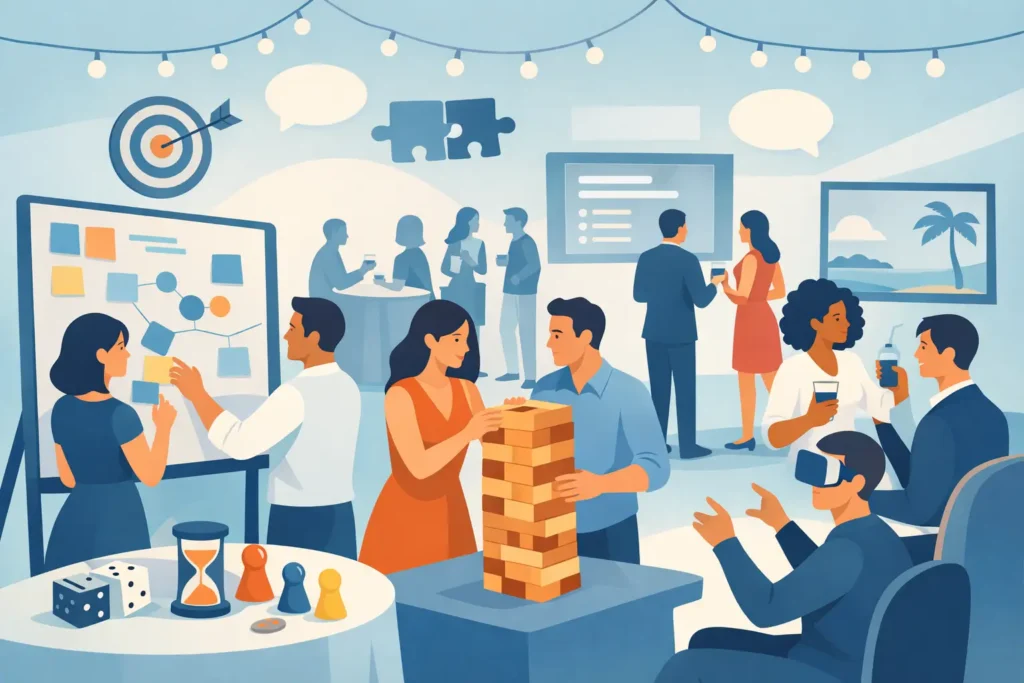
A reception can look polished on paper and still fall flat in the room. Guests arrive, collect a drink, scan for familiar faces, and retreat to their phones or the safest conversation available. If you are figuring out how to plan interactive receptions, the goal is not to fill every minute. It is to give people a compelling reason to engage with one another, your brand, and the event itself.
For corporate planners, that difference matters. A strong reception creates energy before a keynote, gives clients a reason to stay longer, helps new employees connect, and makes a sponsor or host company feel worth remembering. A weak one becomes expensive background noise.
Start With the Result You Need From the Room
Interactive does not automatically mean loud, complicated, or packed with activities. The right experience depends on what success looks like for your event.
At a sales kickoff, interaction may need to break down silos between regional teams and create momentum for the meeting ahead. At a client appreciation reception, it may mean making guests feel personally seen without forcing them into awkward participation. At a trade show hospitality event, the priority may be moving conversations from casual introductions to qualified sales opportunities.
Get specific before you choose entertainment, food stations, games, or technology. Ask what you want guests to do differently because they attended. Do you need them to meet three new people? Learn a product story? Stay through the final hour? Share content socially? Give your leadership team easy openings for meaningful conversations?
That answer becomes your filter. If an element is visually impressive but does not support the outcome, it may be decoration rather than strategy.
Design for Conversation, Not Just Consumption
Guests do not become engaged because there is more to look at. They engage when the environment makes participation easy and low-risk.
Start with the physical layout. Avoid placing all food, bars, and entertainment along the perimeter of a large room. That setup leaves an empty center and encourages guests to form closed circles at the edges. Create several points of interest throughout the space so people naturally circulate. A tasting station, a branded photo moment, a demonstration area, and a roaming performer can each give guests a reason to move.
Seating deserves the same attention. A reception does not need a ballroom full of tables, but it does need places where conversations can land. Use a mix of cocktail tables, soft seating, and small clusters that support groups of two to six people. If every surface is occupied by plates, drinks, and giveaway bags, you have unintentionally made networking harder.
Sound is another make-or-break decision. Music should create lift, not force guests to shout. If people cannot hear one another, the room may feel energetic for ten minutes and exhausting for the next ninety. Build the playlist and sound levels around the type of conversation the reception is meant to create.
Give People a Reason to Participate
The best interactive reception ideas have a clear invitation. Guests should understand what is happening within seconds and feel that joining will be easy, rewarding, or entertaining.
A custom cocktail station can work when it includes a host who prompts choices and tells a quick story. A photo activation works better when it provides a playful challenge or personalized takeaway instead of simply presenting a backdrop. A product demo becomes more valuable when attendees can influence the outcome, test something, or see their own ideas reflected in the presentation.
Live entertainment is particularly effective because it gives strangers a shared moment. Strolling close-up magic, for example, gathers small groups organically. A performer creates a moment of surprise, guests react together, and conversation continues after the performer moves on. That is a very different result from placing a musician in a corner and hoping the room takes care of itself.
For business events, the strongest performers can also weave in a company message, product benefit, or campaign theme without making the reception feel like a sales presentation. Mike Seege uses interactive magic this way: as a conversation starter that helps brands become part of the moment guests are already talking about.
Build Interaction in Waves
One common planning mistake is scheduling a single big activation at the beginning and expecting it to carry the entire event. Receptions have a natural rhythm. Guests arrive at different times, conversations form and fade, and energy can dip quickly after food service.
Plan interaction in waves. The first 20 minutes should make arrival easy. Have a visible welcome point, a great first visual, and an activity that does not require guests to know anyone in the room. Roaming entertainment, a warm emcee welcome, or a quick branded challenge can immediately change the atmosphere from waiting to participating.
The middle portion is when you want deeper engagement. This is the time for hosted stations, group moments, interactive demonstrations, or strategic introductions by your team. If the reception includes executives, sponsors, or salespeople, give them a role. They do not need scripted speeches, but they should know where to be and how to invite people into the experience.
Near the end, offer a memorable payoff. It could be a short featured performance, a prize reveal, a collective toast, or a final piece of content guests want to photograph and share. A closing moment gives the event shape. It also prevents guests from simply drifting out with no final impression.
Make Networking Feel Less Like Networking
No one gets excited by a sign that says, “Network.” They do respond to a shared task, a surprising moment, or an easy prompt that removes the burden of making the first move.
If your audience is mostly strangers, build light structure into the reception. Conversation cards at tables can work, but only when the questions are specific and worth answering. Skip generic icebreakers. Ask about a professional win, a trend guests are watching, or a challenge relevant to the industry. For an internal event, use prompts that reveal expertise across departments rather than personal trivia that can feel forced.
Interactive team challenges can be useful for smaller groups, especially when your objective is collaboration. Keep them brief and make the business relevance clear. A communication-based activity can reinforce how teams solve problems under pressure. A creative challenge can surface different working styles. But if attendees have spent all day in meetings, do not turn the reception into another workshop. The experience needs to feel like a release, not an assignment.
Connect the Experience to Your Brand Carefully
Corporate receptions are not neutral territory. Every detail signals something about the host company. The trick is to make branding feel integrated rather than pasted on.
Use your brand story as a creative ingredient, not a logo-placement exercise. A theme can shape the language used by hosts, the questions asked at an activation, the visuals guests take home, and the story behind a featured performance. When the brand is part of the experience, people remember it because they participated in it.
There is a trade-off here. A heavily branded activity can deliver a clear message, but it may feel less welcoming if guests sense they are being pushed into a pitch. A more entertainment-driven experience can generate stronger emotion and conversation, but it requires a smart follow-up plan if lead capture is the priority. Decide which matters most for this event and calibrate accordingly.
For trade show receptions, make the handoff explicit. If a performer or host has gathered a crowd, your sales team should be ready with a natural next step: a demonstration, an appointment invitation, or a concise question that identifies interest. Do not ask entertainers to generate attention and then leave the opportunity unattended.
Plan the Logistics That Protect the Experience
Interactive receptions only feel effortless when someone has managed the details. Share a clear event flow with every vendor, including load-in timing, performance zones, audio needs, dress code, attendee profile, and the exact moments when you expect the room to shift.
Brief your internal team too. Let them know the event objective, who the priority guests are, and where interaction is happening. If VIPs are meant to have a premium experience, do not hope they happen to find it. Assign a host to welcome and guide them.
Also consider accessibility and comfort. Give guests ways to participate without requiring physical exertion, public speaking, or constant social energy. The most inclusive interactive design offers multiple entry points: watching, joining a small group, having a one-on-one moment, or contributing at their own pace.
Finally, protect the budget for facilitation. An activation without a capable host can become an unattended prop. The right people in the room, whether they are entertainers, brand ambassadors, emcees, or internal leaders, turn an idea into an actual guest experience.
Measure More Than Attendance
Headcount is useful, but it does not tell you whether the reception worked. Look at dwell time, participation levels, conversations started, meetings booked, leads collected, social sharing, and post-event comments. For internal gatherings, measure whether attendees made useful new connections or whether the event changed the energy heading into the next session.
Capture feedback while the memory is fresh. A short question in a follow-up message can reveal which moments guests actually remember. Your team can also keep informal notes on where crowds formed, where conversation was strongest, and which elements were ignored. Those observations will make the next reception sharper.
The right reception does more than keep guests occupied between agenda items. It creates the moments people retell on the flight home, the conversation openings your team needs, and the feeling that your company knew exactly how to bring a room to life.