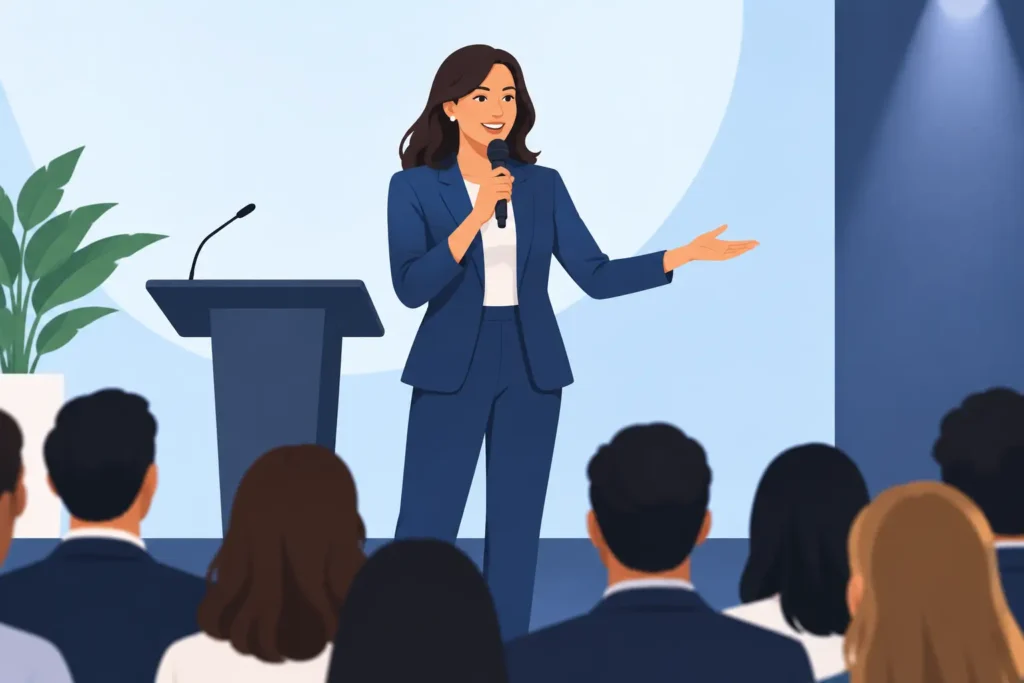
A conference can have a beautiful ballroom, a strong speaker lineup, and a polished agenda, then lose momentum in the gaps between sessions. That is where the answer to what makes an effective emcee becomes clear. The right host does more than announce names. They control energy, protect the schedule, make speakers look prepared, and give attendees a reason to stay engaged from the opening moment to the final send-off.
For corporate event planners, an emcee is not a decorative add-on. They are the person holding the room together while a hundred moving parts happen behind the scenes. When that role is handled well, your event feels intentional, confident, and worth remembering.
What Makes an Effective Emcee for Corporate Events?
An effective emcee combines stage presence with operational discipline. They can command attention without making the event about themselves. They understand when to raise the energy, when to create space for a serious message, and when to move on before a transition becomes dead air.
That balance matters because corporate audiences are not all arriving with the same level of interest. Some attendees are eager to connect. Others are checking email between sessions. Some are there because their manager asked them to attend. A skilled emcee earns the room quickly and keeps it with purposeful pacing, relevant humor, and clear communication.
Most importantly, they understand the event’s business objective. A sales kickoff has different stakes than an awards dinner. A leadership summit needs a different tone than a trade show presentation or customer appreciation event. The best emcees adjust their delivery to support the outcome, not simply perform a rehearsed routine.
They Create Energy Without Creating Chaos
High energy is useful. Forced energy is exhausting.
A capable emcee reads the room and gives it what it needs. At 8:00 a.m., that may mean a sharp opening, a quick audience interaction, and a warm dose of humor that gets people present. After lunch, it may mean a faster pace and a stronger call for participation. Before an emotional recognition segment, it may mean stepping back and setting a respectful tone.
The goal is not constant volume. The goal is attention.
An inexperienced host may fill every second with chatter because silence feels uncomfortable. A professional knows that a pause can create anticipation, give a speaker room to land an important point, or let an audience react naturally. That level of control keeps the program lively without making it feel frantic.
They Know the Difference Between Funny and Distracting
Humor can make a corporate event more human, but it has to serve the room. The best emcees use clean, situational material and avoid jokes that put employees, executives, sponsors, or audience members in an awkward position.
A laugh is valuable when it builds rapport. It is a problem when it pulls focus from the CEO’s message, undermines an award recipient, or makes the company look careless in front of clients. A strong emcee has enough range to be entertaining without taking unnecessary risks.
They Keep the Event Moving
Every planner knows the pressure of a schedule that begins to slide. A speaker runs long. A video will not play. Catering needs five more minutes. An executive changes the order of presentations moments before taking the stage.
An effective emcee handles those moments with calm authority. They can shorten an introduction, bridge an unexpected delay, reset the audience after a technical issue, and adjust their pacing without broadcasting panic. Attendees should feel that the event is moving forward, even if the production team is solving a challenge behind the curtain.
This is one reason an experienced live performer can be a smart choice. Stage instincts matter. A host who has spent years working with real audiences understands timing in a way a script alone cannot teach.
Preparation Is What Makes Flexibility Possible
The ability to improvise does not mean showing up unprepared. Quite the opposite. Great emcees do the homework that lets them adapt confidently.
Before the event, they should understand the agenda, speaker names and titles, pronunciation, sponsor commitments, key messages, award categories, production cues, and any language that is off-limits. They should also know who has final authority if last-minute changes are needed.
For a branded event, they need more than a logo on a screen. They should understand the company story, the audience makeup, and why attendees are in the room. When an emcee can naturally reinforce a campaign theme, sales message, or company value, the program feels connected rather than stitched together.
They Make Speakers Look Better
A great emcee does not merely introduce speakers. They set them up to win.
That means giving the audience context before a presenter walks onstage. Why should attendees listen? What problem will this speaker address? What should the room be ready to think about, celebrate, or act on? A concise, well-delivered introduction creates anticipation and credibility before the first slide appears.
It also means knowing when not to overdo it. A keynote speaker does not need a five-minute biography before they begin. An award recipient should not have their biggest accomplishment buried under generic filler. The best introductions are tailored, accurate, and built for momentum.
When a speaker finishes, the emcee’s job continues. They can reinforce a key takeaway, invite a strong round of applause, direct attendees toward the next action, and create a clean handoff to the next segment. Those transitions may look effortless, but they are often the difference between a professional program and one that feels disjointed.
They Engage the Audience With Purpose
Audience interaction is powerful when it has a reason. It can wake up a room, make a brand message stick, and turn passive attendees into participants. But not every event needs a loud contest or a volunteer pulled onstage.
The right approach depends on the audience, venue, and objective. A conservative leadership group may respond best to smart questions and brief moments of recognition. A sales team may thrive on competition, call-and-response, and higher-energy participation. A customer event may need a host who is warm, polished, and focused on hospitality.
An effective emcee gives people low-risk ways to engage. They invite applause, ask for a show of hands, acknowledge shared experiences, and make the room feel like one group rather than a collection of strangers. The result is stronger attention and a more memorable event experience.
They Represent the Brand Under Pressure
The emcee is often the most visible person onstage besides company leadership. Their appearance, language, humor, confidence, and professionalism become part of the audience’s impression of your organization.
That is why reliability matters as much as charisma. A corporate emcee should arrive prepared, communicate clearly with the production team, respect the run of show, and understand the boundaries of the event. They should be comfortable speaking to executives one minute and energizing a ballroom the next.
This is not the place to hire solely on the strength of a flashy demo reel. Ask how the emcee prepares, how they handle time changes, what information they need from your team, and how they customize their approach. Chemistry matters, but so does the confidence that they will protect your event when conditions are less than perfect.
Choosing the Right Emcee for Your Room
Look for someone who can be both entertaining and useful. They should have a proven ability to work live, a style that fits your company culture, and enough versatility to handle planned moments and unexpected ones.
If your agenda includes major transitions, executive speakers, award presentations, or a need to keep a large room energized, professional emceeing deserves a real place in the budget. It is one of the few roles that touches every attendee, every speaker, and every key moment on the program.
The right host gives your event a pulse. Choose one who can make the audience feel looked after, make your message feel bigger, and make your team look like they planned every moment that way.