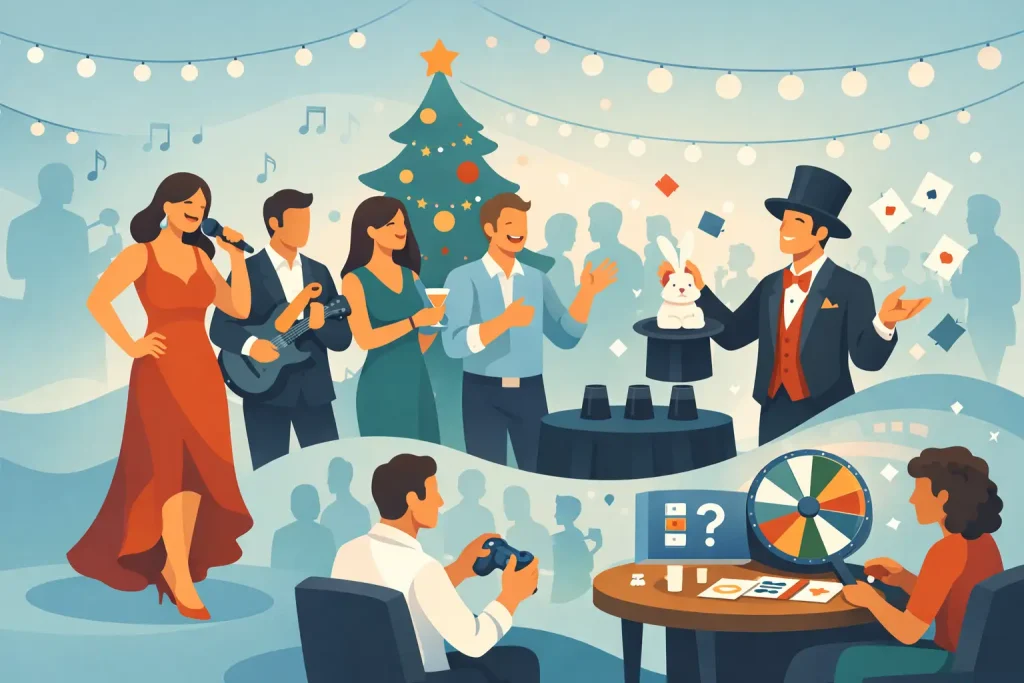
The best entertainment for company holiday party events does more than fill a gap between cocktails and dessert. It gives people a reason to stay, talk, laugh, and remember who brought the room to life. That matters when your guest list includes executives, new hires, remote employees meeting in person for the first time, and clients who all expect a polished experience.
A holiday party is one of the few business events where the pressure is high but the format is supposed to feel effortless. Your team wants fun. Leadership wants the investment to reflect well on the company. And the planner needs an experience that works in the actual room, on the actual schedule, with zero awkward dead space.
What Makes Holiday Party Entertainment Work?
The strongest entertainment is built around participation, not passive viewing. A band can sound great, and a DJ can keep a dance floor moving, but neither automatically creates connection across departments or gives guests who do not dance a memorable role in the evening.
For most corporate holiday parties, the winning choice is entertainment that meets people where they are. It should work during a reception, create a focal point after dinner, and give guests something better to discuss than work deadlines. It also needs to match the room. A 60-person leadership dinner calls for a different solution than a 600-person ballroom celebration.
The right performer understands that distinction. They read the crowd, adapt to the pace of service, keep the spotlight on guests, and coordinate with your venue, AV team, and event schedule. That is the difference between hiring an act and hiring an event partner.
Best Entertainment for Company Holiday Party Energy
Interactive magic is one of the most flexible and effective choices for a corporate holiday party because it creates genuine reactions without forcing anyone into an uncomfortable participation exercise. The effect happens in guests’ hands, at their table, or right in front of a small group. People laugh, pull out their phones, and immediately bring coworkers over to see what they missed.
That built-in word of mouth is powerful. Instead of trying to persuade guests to engage, the entertainment becomes the reason engagement spreads through the room.
Strolling Magic for Receptions and Open Houses
Strolling magic is especially effective for cocktail hours, casino nights, open-house-style celebrations, and events where people arrive at different times. A skilled corporate magician moves through the room, performs for small groups, and creates high-impact moments without stopping conversation or disrupting service.
This format solves a common holiday party problem: the first 45 minutes can feel scattered. Some guests head straight to the bar, some stay with familiar colleagues, and some hover near the entrance waiting for the event to find its rhythm. Interactive close-up magic breaks the ice naturally. It gives strangers a shared experience and helps separate groups start mingling.
It is also ideal when your venue has multiple spaces. The entertainment can travel from the reception area to sponsor stations, VIP lounges, or dessert displays, bringing energy where it is needed rather than asking guests to find it.
A Headline Show for a Shared Big Moment
If you need everyone focused at once, a headline stage show creates the moment your party is built around. This format works well after dinner, before awards, or as the centerpiece of a holiday celebration where leadership wants to welcome the team and set a celebratory tone.
The best corporate shows are fast-paced, funny, and designed for adults in a professional setting. They do not rely on embarrassing volunteers or material that leaves HR holding its breath. Instead, the audience becomes part of a polished, surprising experience that feels personal to the room.
A headline show works particularly well when attendance is high and the goal is to give every guest the same memorable takeaway. It turns a nice dinner into an event people mention long after January.
Interactive Team Experiences for Culture-Focused Events
Some organizations want more than a party. They want a celebration that also strengthens connection after a demanding year, a merger, major growth, or a shift to hybrid work. In that case, interactive team-building entertainment can deliver a bigger return than a standard performance.
The key is keeping it fun first. Communication and problem-solving challenges work when they feel like a shared win, not a mandatory workshop wearing a Santa hat. Guests should leave saying, “That was surprisingly great,” not wondering why they were asked to attend a training session during a holiday event.
For HR and culture leaders, this format is especially valuable when the event includes teams that rarely collaborate. It creates a common story without turning the evening into a lecture about company values.
Entertainment Choices That Depend on Your Event Format
There is no single answer for every celebration. The best option depends on how guests will use the space, how long the event runs, and what success looks like for your company.
A DJ is a smart fit when dancing is the main attraction and your crowd is likely to stay late. A live band can add style and scale to a gala, especially when music is central to the theme. A comedian may work for a group with a known sense of humor, but it carries more content risk and usually requires guests to sit and watch. Casino tables create activity, although they can divide guests into small groups and may not give the full room a shared experience.
Interactive magic can complement any of these choices. It is often the answer when you need something that works before the dance floor opens, between courses, around a casino setup, or as the main stage feature. It is not competing with the party. It gives the party momentum.
How to Choose Entertainment Without Creating More Work
The entertainment decision should reduce your planning stress, not add another vendor to manage. Before booking, get clear on four practical questions:
- How many guests are attending, and will they be seated, standing, or moving between rooms?
- When does the room need the most energy: arrival, dinner, awards, or late evening?
- Do you need one shared showpiece or continuous engagement throughout the event?
- What level of audience participation fits your company culture?
Then ask prospective entertainers how they handle the details that can make or break the experience. Can they coordinate with your timeline? Do they bring professional sound support when needed? Can they adjust for a loud cocktail reception, a ballroom stage, or an intimate private dining room? Do they understand how to work with executive remarks, awards, and venue service?
Those questions reveal whether you are booking a talented performer or a reliable corporate professional. You need both.
Make the Entertainment Feel Like Part of the Event
The most memorable holiday party entertainment does not feel dropped into the schedule. It supports the experience you are already trying to create.
For example, a magician can incorporate a company message, an anniversary, a product theme, or a custom reveal into a performance without turning it into a sales presentation. For client-facing holiday events, that touch can reinforce your brand while keeping the focus on fun. For internal celebrations, it can recognize a milestone year or bring leadership’s message to life in a way that gets more attention than another slide deck ever could.
Mike Seege approaches corporate entertainment with that business-first mindset: create the reaction, manage the room, and give event planners a program that makes them look prepared. The magic matters, but the outcome matters more.
Avoid the Holiday Party Mistakes Guests Remember
The fastest way to lose a room is to choose entertainment that starts too late, runs too long, or requires more attention than guests are ready to give. A 45-minute seated show during an active cocktail reception will struggle, no matter how talented the performer is. So will a loud act placed in a venue where conversation is the real priority.
Avoid entertainment that makes guests feel singled out. The holiday party should be an easy yes for every personality type, from the extrovert at the front of the dance floor to the quieter employee who would rather watch from the edge. Great interactive entertainment invites people in without putting them on the spot.
Also, do not underestimate timing. A short, high-impact performance at the right moment beats a longer program placed where it interrupts dinner, speeches, or guest flow. The experience should feel like the night is building, not pausing.
Give your guests a reason to look up from their phones, pull a colleague into the moment, and say, “You have to see this.” That is how a company holiday party becomes the event people are still talking about when next year’s planning starts.