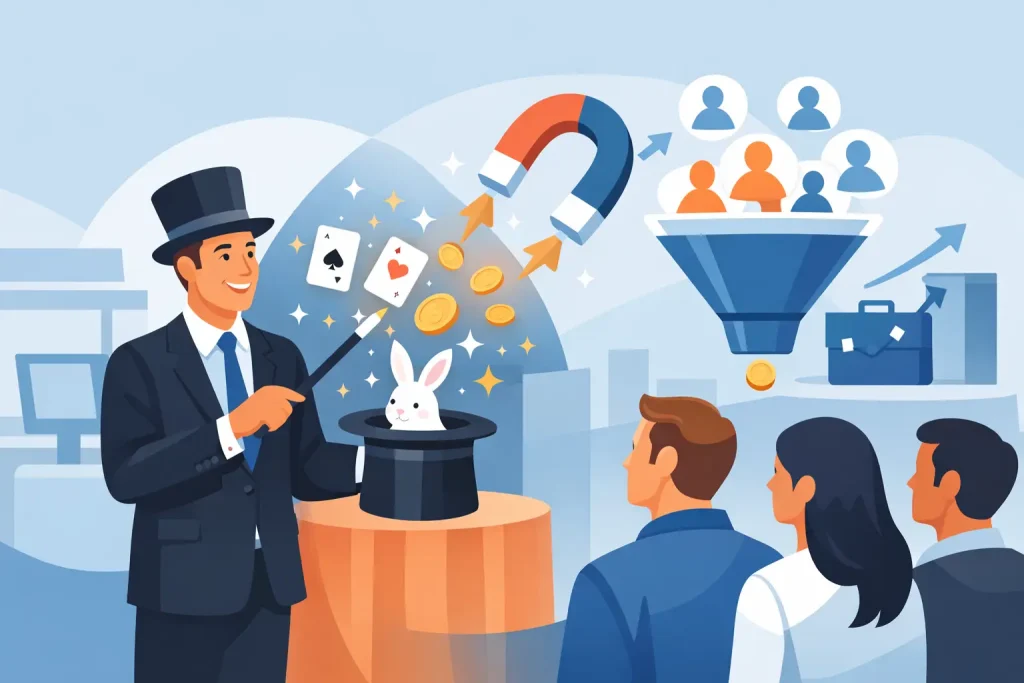
A crowded expo floor does not reward the booth with the nicest carpet or the largest banner. It rewards the booth that gives people a reason to stop. A Mike Seege trade show magician presentation is built for that moment: turning passing attendees into an engaged audience, then turning that attention into a meaningful opening for your sales team.
This is not magic performed off to the side while your staff hopes someone notices. It is a planned booth experience designed around traffic, messaging, conversation, and lead capture. When attendees are being pulled in ten directions, a live, interactive presentation can make your brand the one they remember when the show floor closes.
Why a Trade Show Magician Changes Booth Behavior
Trade show attendees have learned to filter out almost everything. They walk past giveaways, scan signs in seconds, and often avoid eye contact with exhibitors because they expect a sales pitch. The challenge is not simply getting more people near your booth. The challenge is creating a low-pressure reason for the right people to pause.
Magic does that fast. A visual moment creates curiosity. A crowd creates social proof. A smart presenter keeps the energy moving and gives people permission to join without feeling trapped in a sales conversation. Once people stop, your team has something far more valuable than a cold approach: a warm introduction.
That distinction matters. A booth can be busy without producing useful opportunities. The goal is not a crowd for the sake of a crowd. The goal is a crowd that stays long enough to hear what you do, understand why it matters, and meet the people who can help them take the next step.
Mike Seege Trade Show Magician Presentations Put Your Message on Stage
The strongest trade show entertainment is not generic. It gives attendees a memorable experience while reinforcing the message your company needs to deliver.
Mike Seege can build a presentation around a product benefit, campaign theme, industry challenge, or key differentiator. Your message is not awkwardly bolted onto a trick at the last second. It is worked into the pacing, language, and moments of surprise so it lands naturally with the audience.
Imagine launching a new software platform. Rather than asking attendees to read a dense feature list, the presentation can frame the product around speed, visibility, problem-solving, or transformation. A memorable effect supports the point, then the sales team is ready to continue the conversation with a demonstration or qualifying question.
That is the business case for customized magic. People may forget another brochure, but they remember the company that made them stop, laugh, react, and see a message in a completely different way.
The Show Creates the Opening. Your Team Builds the Relationship.
A trade show magician should never replace your sales staff. The performance should make your staff more effective.
Before the event, establish exactly what happens after each presentation. Will a team member invite attendees into a product demo? Will guests scan a QR code, enter a drawing, schedule a meeting, or answer a quick qualifying question? The handoff needs to be simple enough that it happens consistently, even during a busy hour.
The best handoffs feel natural. A presenter gathers attention, reinforces the reason your company is worth knowing, and directs interested attendees to the right next step. Your team is no longer interrupting a passerby. They are meeting someone who has already chosen to engage.
What a High-Impact Booth Experience Looks Like
A successful presentation has a rhythm. It starts by attracting attention from the aisle, quickly rewards the people who stop, and grows into a short, energetic experience that can repeat throughout the day. The format respects the reality of the show floor: attendees are busy, schedules shift, and no one wants to stand through a 30-minute presentation to understand one idea.
Short, repeatable sets are often the right choice for high-traffic booths. They create multiple opportunities each hour for new groups to gather. For a major launch or a booth with a theater area, a more structured presentation may make sense. It depends on the size of the space, the complexity of the message, the staffing plan, and whether your priority is maximum volume or deeper conversations.
A polished trade show performer also understands the practical details that can make or break the experience. Sound must carry without overwhelming neighboring exhibitors. Sightlines need to work for attendees standing in an aisle. Timing must accommodate show hours, breaks, and the moments when traffic naturally surges.
This is where professional experience matters. Corporate event teams do not need another vendor who requires constant direction on-site. They need a partner who arrives prepared, works within the show environment, and helps the booth feel active from open to close.
Plan the Lead Strategy Before the First Crowd Forms
Entertainment gets attention. Planning determines what that attention is worth.
Start with a clear definition of a qualified lead. For some exhibitors, that means a decision-maker from a target industry. For others, it means a scheduled consultation, a product demonstration, or permission for a follow-up conversation. The definition should shape the call to action and the role each booth team member plays.
Next, give staff a simple conversation path. After the presentation, they should know how to introduce themselves, what question to ask first, and how to separate real prospects from people who simply enjoyed the show. Avoid turning the handoff into an interrogation. A good opener connects directly to the presentation and gives the attendee an easy way to share what brought them to the booth.
Finally, measure more than badge scans. Track presentation times, crowd size, demos booked, meetings scheduled, and the number of leads that match your target criteria. If the event has a longer sales cycle, compare post-show opportunities and pipeline value with previous exhibitions. That gives marketing leadership a clearer picture of what worked than raw traffic alone.
When Trade Show Magic Is the Right Fit
A live attraction is especially effective when your booth faces a tough traffic problem, your offering needs a clearer story, or your team needs help creating energy in a large exhibit hall. It is also a strong fit for companies introducing something new, competing in a crowded category, or looking to give a sales team a better conversation starter.
It may be less effective when the booth is severely understaffed or there is no plan to capture and follow up with leads. A performer can bring people in, but no one can convert opportunities that the booth team is not ready to handle. If you expect substantial traffic, make sure enough staff members are available to greet, qualify, and continue conversations while the next audience begins to form.
Space matters too. A compact booth can still benefit from close-up magic and aisle-side engagement, while a larger footprint can support repeated presentations that pull a crowd. The right format is not about choosing the biggest show. It is about matching the performance to your goals, footprint, and staffing capacity.
Make Your Booth the Part of the Show People Talk About
Trade shows create a rare opportunity: hundreds or thousands of relevant people are already in the room. But they are also surrounded by competitors making the same claim for their attention. A strong booth experience gives prospects a reason to choose your space first and remember your message afterward.
Mike Seege brings the showmanship, timing, and audience psychology that turn a booth into a destination. More importantly, the presentation is designed to support the result your team actually needs: stronger engagement, warmer conversations, and leads worth following up on.
When your next exhibit has to do more than look good, give attendees a reason to stop – and give your sales team a reason to be ready when they do.