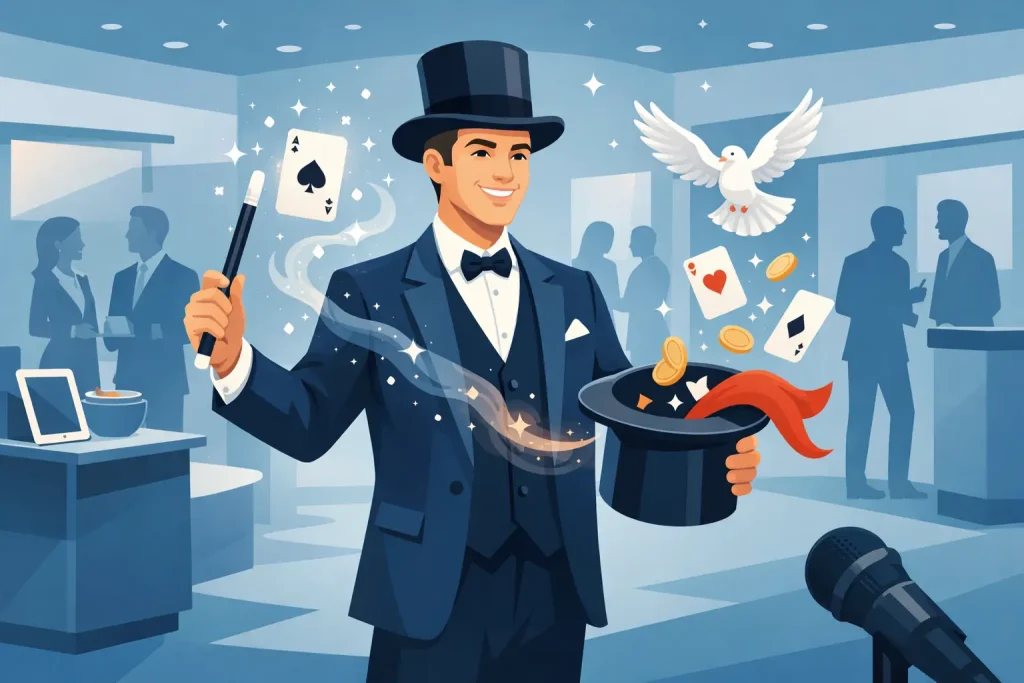
A packed exhibit hall is not the same thing as a productive booth. At Orlando’s major conventions, attendees move fast, screens compete for attention, and sales teams get only seconds to earn a stop. Orlando trade show magician Mike Seege helps exhibitors turn those seconds into a crowd, a conversation, and a stronger opportunity to put qualified prospects in front of the right people.
This is not magic added as an afterthought. It is a live, high-energy attraction designed around the business goal: draw attendees in, hold their attention, communicate a message they will remember, and create a natural handoff to your team. When your booth has to perform in a room full of competing brands, passive giveaways and a bowl of candy will not carry the day.
Why an Orlando Trade Show Magician Changes the Booth Dynamic
Trade show attendees are trained to filter. They have seen the banners, heard the elevator pitches, and collected more promotional items than they can fit in a carry-on bag. A compelling live moment interrupts that pattern without forcing anyone into a sales conversation before they are ready.
A skilled trade show magician builds a visible pocket of energy around your exhibit. People stop because something unexpected is happening. They stay because the experience is interactive. Their colleagues notice the crowd and come over to see what they missed. That social proof matters. A busy booth signals relevance before a member of your team says a word.
The real value comes after the applause. Mike can direct attention to a product benefit, campaign theme, or key differentiator woven into the presentation. Then a prospect is introduced to a salesperson while their attention is high and the interaction feels earned, not interrupted. That is a far better starting point than chasing someone down an aisle with a scanner.
For Orlando exhibitors, this matters especially at large-scale events. Whether the show is hosted at the Orange County Convention Center or a resort venue, foot traffic can be intense and spread across a huge floor. The right attraction gives attendees a reason to make a deliberate stop at your space.
More Traffic Is Only the First Result
A trade show performance should never be judged only by the size of the crowd. A crowd that blocks the aisle but produces no meaningful conversations is a production, not a sales tool. The goal is to create an engaging experience with a clear path from spectator to prospect.
That requires coordination. Before the event, the performance can be shaped around your objectives, your audience, and the language your team needs attendees to remember. If you are launching software, demonstrating a technical service, recruiting channel partners, or building awareness for a new brand, the presentation should support that mission rather than compete with it.
A customized routine can spotlight a product name, illustrate a business problem, or reinforce a central message in a way a printed sign cannot. The best moments are concise, visual, and easy to understand in a noisy expo environment. They create a story attendees can repeat later: “You have to see what they are doing at that booth.”
That is what makes the message travel beyond the performance itself. People share the experience with coworkers, bring decision-makers back, and remember the company that gave them something worth talking about.
The handoff makes or breaks the investment
Even a great crowd needs a plan. Your booth staff should know exactly when and how to enter the interaction. A strong handoff might sound as simple as, “If you liked that, Sarah can show you how we solve the same challenge for teams like yours.” It is brief, relevant, and keeps the momentum moving forward.
Assign a designated team member to greet prospects as the performance ends. Give that person a clear qualifying question and a fast next step, whether that is a demo, a meeting booking, a badge scan, or an invitation to return for a private conversation. Without this structure, people may enjoy the magic and disappear back into the crowd.
The trade-off is straightforward: the more complicated the pitch, the more likely you are to lose the energy that brought people in. Keep the first conversation focused. The performer gets attention. Your team earns permission to continue it.
What a Customized Trade Show Performance Looks Like
Customization does not mean forcing a corporate slogan into every line. It means selecting the right moments to make the brand and the effect feel connected. A financial technology company, a healthcare brand, and a manufacturing supplier may all need traffic, but their audiences respond to different language, pacing, and themes.
For a technical exhibitor, the presentation might simplify a complex idea into an impossible visual moment, creating curiosity before a specialist explains the details. For a consumer-facing brand, it may be faster, more playful, and built to generate visible crowd response. For a company courting senior decision-makers, the tone can be polished and sophisticated while still delivering the surprise that makes people stop.
Mike Seege works as both performer and event partner. That means understanding where the booth sits, how much aisle space is available, what the schedule looks like, and when your sales team has enough capacity to handle a surge of interested people. A presentation that draws a crowd every few minutes may be right for one exhibitor. Another may need smaller, more frequent interactions that allow for deeper conversations.
The best format depends on your floor plan, your staffing level, and what counts as a valuable lead. There is no one-size-fits-all answer, which is exactly why a business-first approach matters.
How to Prepare Your Team for Better Leads
Entertainment can create the opening, but your internal preparation determines what happens next. Before doors open, make sure your team agrees on the message they want prospects to leave with. If every staff member delivers a different explanation of the product, even a memorable performance will not fix the disconnect.
Brief the team on three things: who the ideal attendee is, what question qualifies them, and what action should happen after that question. For example, a team might ask what system a prospect currently uses, identify whether they influence purchasing, and offer a scheduled demo. Simple beats clever when the floor is loud and the line is growing.
It also helps to decide who will manage the crowd. One person should welcome attendees, one should scan or capture information when appropriate, and one should be ready to take qualified conversations off the main aisle. When everyone knows their role, the booth feels organized rather than overwhelmed.
Do not hide the sales team behind the booth furniture. Stand them where they can make eye contact and greet people naturally. The magic creates a reason to stop; a warm, prepared human connection is what turns that stop into business.
Why Reliability Matters at Orlando Events
Event planners already have enough moving pieces. They are managing freight windows, badge issues, staffing changes, AV requests, client expectations, and a schedule that rarely leaves room for surprises. The entertainment partner should reduce pressure, not add to it.
That means arriving prepared, communicating clearly, working within show regulations, and adapting to the realities of the venue. It also means knowing when to raise the energy and when to make space for a key sales conversation. Professional trade show entertainment is not about making the performer the center of attention all day. It is about making the exhibiting company impossible to ignore for the right reasons.
A polished performer can also help when your team needs a reset. Mid-afternoon traffic drops, a long session ends, or the booth energy starts to flatten. A well-timed interactive set gives the space a fresh pulse and gives attendees a new reason to gather.
Make Your Booth the Stop People Recommend
The strongest trade show experiences do not feel like a hard sell. They feel like the one worthwhile thing attendees stumbled upon between meetings. That is the advantage of interactive magic built around a business purpose: it earns attention first, then gives your brand a memorable way to use it.
If your Orlando exhibit needs more than foot traffic, build the experience around the conversations you want your sales team to have. Give attendees a reason to stop, give your people a smart handoff, and give the show floor something worth talking about long after the final trick.