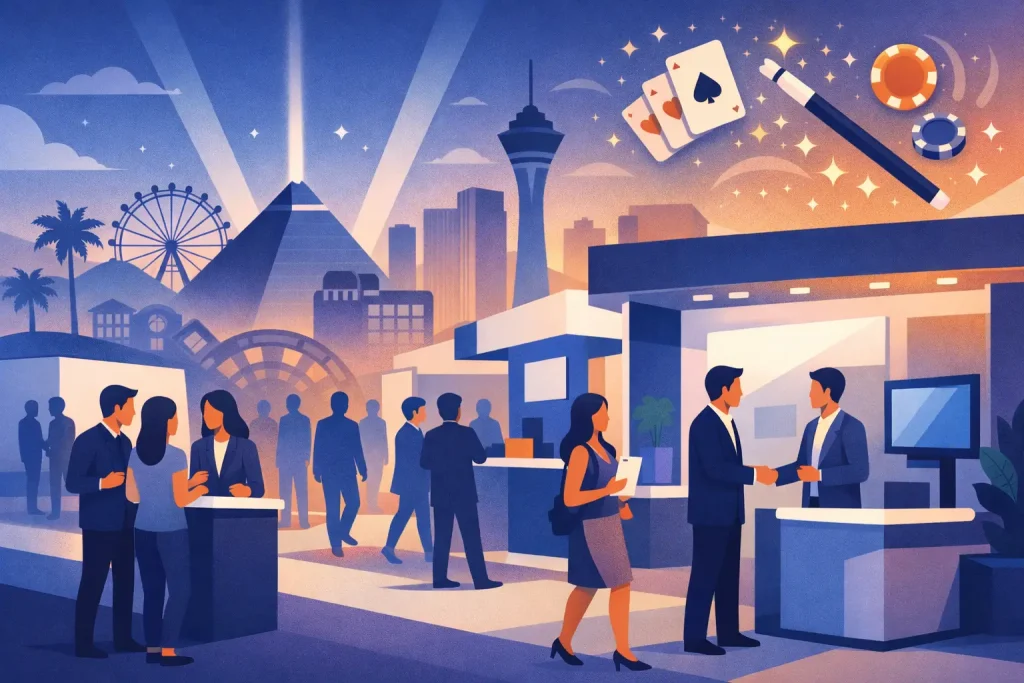
A Las Vegas exhibit hall can make a great product look invisible. The aisles are loud, schedules are packed, and attendees have learned to walk past nearly every booth without breaking stride. Trade show magic vegas exhibitors book is not background entertainment. It is a live, high-energy reason for the right people to stop, engage, and give your sales team an opening.
That distinction matters. A crowded booth is useful only when the crowd contains people your team can speak with. The best trade show performer does more than draw a circle of spectators. They create a moment that earns attention, works your key message into the experience, and hands your representatives warm conversations instead of cold passersby.
Why Trade Show Magic Vegas Exhibitors Need Works
Las Vegas is built for spectacle. That raises the standard for every exhibitor on the floor. A basic giveaway, a looping video, or a bowl of candy may get a glance, but it rarely gives attendees a reason to stay. Trade show magic creates an immediate interruption in the pattern of the aisle: people notice a reaction, hear applause, and naturally move closer to find out what is happening.
The real value is what happens next. A skilled trade show magician gathers a group quickly, delivers an entertaining branded presentation in a few minutes, and creates a clean handoff to the sales team. The performance becomes the attraction. Your product, value proposition, and call to action become the reason to continue the conversation.
That is especially effective in Las Vegas, where many attendees are managing information overload. They may visit dozens of booths in a day. They will not remember every brochure or product demonstration. They are far more likely to remember the company that made them laugh, surprised them, and then gave them a clear answer to a business problem.
Start With the Result You Need From the Booth
Before booking entertainment, decide what a successful show looks like for your team. Do you need more badge scans? Are you launching a new product? Is your sales group trying to get meetings with a narrow list of decision-makers? Or is the challenge that prospects stop briefly, then disappear before anyone can start a meaningful conversation?
Those goals require different performance strategies. If the priority is pure foot traffic, short, repeated sets near the aisle can create visible energy throughout the day. If your goal is lead quality, the show can include a simple qualification step, such as inviting attendees to meet the team for a personalized demonstration or enter a drawing after a conversation. If brand recall is the priority, the presentation should build around one strong message rather than trying to squeeze in every product feature.
A trade show magician should ask about your audience, product, booth footprint, sales process, and show hours before proposing an approach. That planning is not a luxury. It is what keeps the performance from becoming a fun distraction with no business follow-through.
Build Your Message Into the Magic
The strongest branded magic presentations do not stop every 30 seconds to repeat a slogan. That feels forced, and attendees can spot a sales pitch from across the convention floor. Instead, the message should have a natural role in the routine.
A product benefit can become the impossible outcome. A company theme can frame the story. A featured item, image, or keyword can appear in a surprising final reveal. When the reveal is clean, memorable, and connected to your business, people retain it because they experienced it rather than merely heard it.
Keep the message focused. Most trade show audiences will remember one sharp idea, not five competing claims. Give the performer the language your team actually uses with prospects, along with any phrases that must be avoided for compliance or brand reasons. Then let the performance translate that message into something attendees will talk about later.
This is where customization earns its place in the budget. Generic close-up magic can entertain a crowd. Customized trade show magic can make the crowd remember why your company is there.
Turn Attention Into Sales Conversations
A performer should never become a wall between your audience and your sales team. The job is to create a bridge.
Position team members where they can welcome people as the crowd forms and speak to attendees immediately after the final effect. One representative can handle the first question: What brought you to the show? Another can offer a product demo, schedule a meeting, or scan a badge. The handoff needs to feel natural and quick, because the best moment to speak with a prospect is while their attention is already high.
Brief your staff before doors open. They should know the show schedule, the core message, the desired next step, and who is responsible for each lead. If the performer delivers a strong closing line but your team is looking for clipboards or debating who should approach, valuable momentum disappears.
For larger booths, designate a traffic manager. This person keeps the aisle open, directs interested attendees toward the right sales contact, and helps prevent the crowd from blocking product demonstrations. For smaller spaces, the performance may need to be more intimate and mobile, with close-up magic delivered just inside the booth or along its edge.
Make the Booth Experience Fit the Floor
Trade show magic is not one-size-fits-all. A 10-by-10 booth has different needs than an island exhibit with a theater area, and a packed afternoon requires a different approach than the quiet first hour of the morning.
Short scheduled presentations work well when you want people to know exactly when to return. They create anticipation and allow your sales team to prepare for a larger group. Strolling or close-up magic is often a better fit when you need flexible engagement, have a smaller footprint, or want to reach people who may not stop for a formal show.
Sound is another practical consideration. Las Vegas convention halls can be noisy, and nearby exhibitors may be running their own presentations. A polished performer knows how to command attention without creating a volume war, but show management rules and booth placement still matter. Discuss power, microphones, staging, demo screens, crowd flow, and performance timing in advance.
Do not schedule every minute of the day. Your team needs space to handle serious prospects, run demonstrations, and take meetings. A rhythm of high-impact performance sets followed by active sales engagement often produces better results than constant entertainment. It depends on traffic patterns, staffing levels, and the complexity of your sale.
Measure More Than the Crowd Size
A packed booth looks impressive, but applause is not the final metric. Track how many leads came in during performance windows, how many attendees accepted a demo, how many meetings were booked, and how those leads compare with your usual booth traffic.
Ask your sales team what they noticed. Did prospects arrive with more curiosity? Were conversations easier to start? Did visitors repeat the brand message or mention the performance later in the day? Those observations help determine whether the entertainment supported the actual sales process.
You can also compare peak traffic periods against the show schedule. If a three-minute presentation consistently produces a strong cluster of qualified conversations, you have a repeatable engagement tool, not just an entertaining moment.
Choose a Performer Who Understands the Assignment
Not every magician is a trade show magician. Corporate exhibit work demands tight timing, polished communication, comfort around executives, and the ability to perform repeatedly under real event pressure. It also demands the discipline to make your company the star.
Look for a performer who speaks in terms of traffic, messaging, lead handoffs, and booth logistics. Ask how they customize material, how they work with sales teams, and how they adapt when the aisle is slow or suddenly crowded. A professional partner should make your planning easier, not add another moving part for your team to manage.
Mike Seege approaches trade show performance as a business tool built around audience engagement, branded moments, and better sales conversations. That is the standard worth holding any entertainer to when your exhibit budget and company reputation are on the line.
Your booth does not need to be the loudest attraction in Las Vegas. It needs to give the right attendees a reason to stop, a reason to remember you, and an easy reason to talk to your team.