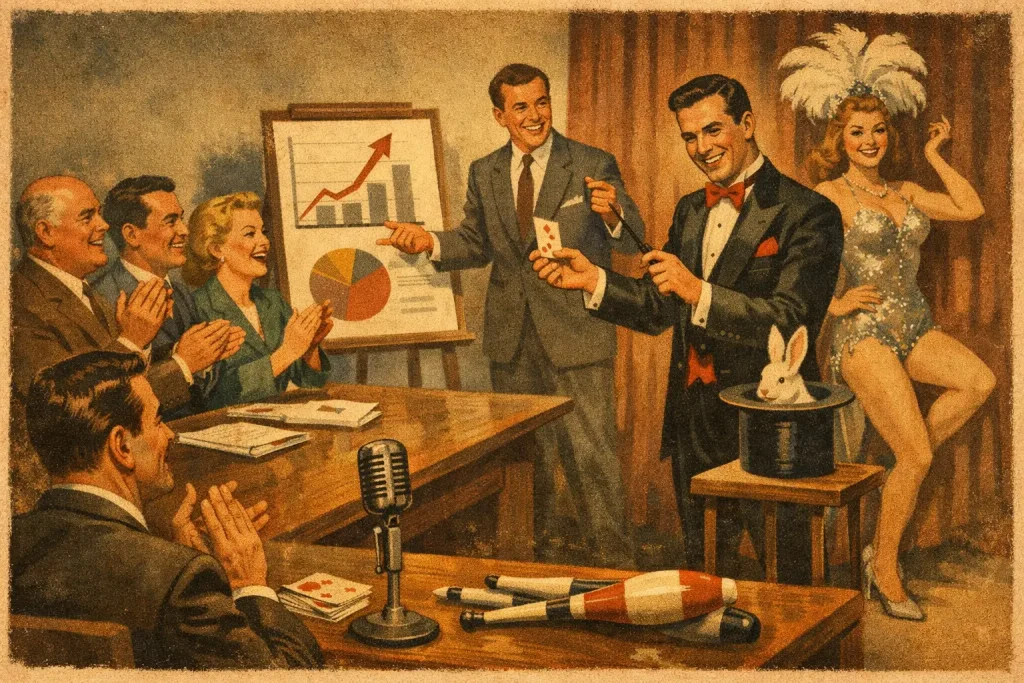
A sales meeting can have a sharp agenda, a beautiful ballroom, and a strong product story – then still lose the room by 2:30 p.m. Sales meeting entertainment is not filler between presentations. Chosen well, it resets attention, rewards performance, reinforces the message, and sends your people back to the field with more energy than they brought in.
That is the difference between booking an act and designing an experience. Your sales team does not need another generic break. They need a moment that makes them feel recognized, involved, and ready to carry the company’s message into their next customer conversation.
Why Sales Meeting Entertainment Matters
Sales meetings carry real weight. Leadership may be introducing a new offer, changing territory strategy, rolling out annual goals, or asking the team to improve a critical metric. Attendees are expected to absorb information, participate in training, and leave motivated. That is a lot to ask from people who may have flown in late, spent the morning checking email, and are already thinking about the pipeline waiting at home.
Entertainment changes the emotional rhythm of the event. The right performer creates a shared moment of surprise, laughter, and participation. That shared reaction is valuable because it pulls people out of passive listening mode. It gives the room a fresh burst of attention before the next presentation, an awards segment, or a key leadership message.
More importantly, a strong entertainment choice tells the team, “This meeting was built for you.” That matters. Sales professionals are often measured relentlessly. A memorable experience can feel like genuine recognition while still supporting the business goals behind the gathering.
Start With the Outcome, Not the Act
The first question should not be, “What kind of entertainment is popular?” Ask what the meeting needs to accomplish.
If the event is a kickoff meeting, the priority may be momentum and confidence. A high-energy interactive show can create the emotional lift that makes a new theme feel real. If the meeting includes a major product launch, entertainment may need to reinforce a message, reveal an object, or turn brand language into a memorable visual moment. If the group is gathering after a difficult quarter, the goal may be connection and morale before leadership asks the team to refocus.
Entertainment also works differently depending on where it sits in the schedule. A reception calls for relaxed interaction that gets strangers talking. A dinner needs a focal point that holds attention without making the evening feel like another training session. A morning general session needs fast energy and a clean handoff to the business program. The format should fit the moment.
A corporate magician, for example, can perform close-up magic during a cocktail reception, present a customized stage show after dinner, or serve as an emcee who keeps the program moving between speakers. Those are three distinct jobs. The best choice depends on the audience flow, room setup, timing, and desired business result.
The Best Formats for Sales Teams
Interactive stage entertainment for a shared reset
A headline performance is often the right answer when the whole team needs to experience the same moment together. It works especially well after dinner, before a keynote, or as the closing experience of a kickoff. The best shows involve volunteers, build momentum quickly, and play to the entire room rather than just the people in the front row.
For sales audiences, interaction matters. These are competitive, relationship-driven professionals. They do not want to be talked at all night. A polished interactive performance gives them something to react to, talk about, and remember long after the final applause.
The trade-off is that stage entertainment needs a real production plan. Sightlines, sound, lighting, room shape, meal service, and start time all affect impact. A performer who understands corporate events will ask those questions early instead of arriving with a one-size-fits-all act.
Strolling entertainment for receptions and networking
If your meeting includes a welcome reception, sponsor event, or awards cocktail hour, strolling magic is a smart way to prevent the room from splitting into small, familiar circles. The performer moves among guests, creates short high-impact moments, and gives people an easy reason to start conversations.
This format is particularly useful when the group includes new hires, regional teams that rarely meet in person, or leadership guests who need natural ways to connect with the sales floor. Rather than demanding everyone’s attention at once, it creates dozens of small shared experiences across the room.
Strolling entertainment is not the right fit when you need everyone focused on one message at the same time. It is built for mingling, not a formal reveal. Used in the right window, however, it can make a reception feel active from the first ten minutes.
An emcee who protects the energy in the room
A sales meeting can lose momentum in the transitions. One speaker runs long. An award recipient takes the scenic route to the stage. AV needs a reset. Suddenly, the audience is reaching for phones and the schedule feels shaky.
An experienced emcee does more than announce names. They create continuity, maintain urgency, introduce speakers with confidence, and fill unexpected gaps without making the audience feel the disruption. Add strong entertainment instincts, and the emcee can turn transitions into moments of laughter, audience participation, or branded reinforcement.
This role is especially valuable for meetings with multiple presenters, awards, video roll-ins, executive panels, and a packed agenda. It is not always necessary for a small, simple gathering. For a larger sales conference, it can be the difference between a program that feels fragmented and one that feels professionally produced.
Customize the Experience Without Forcing the Brand
Customization is where entertainment becomes a business tool. But there is a line between smart integration and putting a logo on everything.
The strongest custom moments connect to the theme, sales language, product story, or audience. A performer might incorporate a launch message into a key effect, use approved company language in a scripted moment, or create an ending that reinforces the meeting’s rallying point. Done well, the brand feels like part of the experience rather than an interruption to it.
Keep the message focused. One clear theme is more memorable than six talking points squeezed into a performance. If leadership wants attendees to leave thinking, “We win by being easier to do business with,” that idea can be reinforced creatively. If the goal is simply “Remember every feature on slide 47,” entertainment is not the cure.
Give the performer useful materials in advance: the agenda, audience size, event theme, key phrases, company culture notes, and any sensitive topics to avoid. That preparation produces better results than last-minute requests for a few logo mentions.
How to Choose Entertainment That Reflects Well on You
Event planners and executive assistants are not just booking talent. They are managing risk. The entertainment has to land with leadership, connect with the sales team, respect the schedule, and make the person who booked it look prepared.
Look for corporate experience first. A performer who succeeds at public shows may not know how to handle a ballroom with delayed dinner service, a conservative executive team, or a room full of high-performing salespeople who expect polish. Corporate events require flexibility, timing, and the judgment to adjust when the plan changes.
Ask how the performer handles participation. Great audience interaction should feel inviting, never embarrassing. Sales teams may enjoy being in the spotlight, but nobody wants to become the punchline in front of colleagues and leadership.
Also ask practical questions before booking: What does the act require for sound and staging? How much setup time is needed? Can the performer work around meal service? Is the program appropriate for a mixed audience? What happens if the agenda shifts? Clear answers are a sign that you are working with a professional partner, not hoping for a good show.
Build Entertainment Into the Agenda Early
The fastest way to weaken a great performance is to treat it as an afterthought. When entertainment is dropped into the last open slot, it may compete with dessert service, an overrun keynote, or attendees already heading toward the exit.
Protect the experience. Give it a clear place in the agenda, communicate why it is there, and let your presenter have the conditions needed to succeed. For a post-dinner show, start after plates are cleared and avoid opening the bar line at the same time. For a reception performer, schedule enough time for meaningful guest interaction. For an emcee, include them in production conversations before event day.
The payoff is bigger than applause. When the room is energized, connected, and emotionally invested, the next message has a better chance of sticking. That is why sales meeting entertainment deserves the same strategic thinking as your keynote, awards program, and training content.
Your team is being asked to create momentum with customers every day. Give them an event that creates momentum for them.